ZZ Plant Care Guide
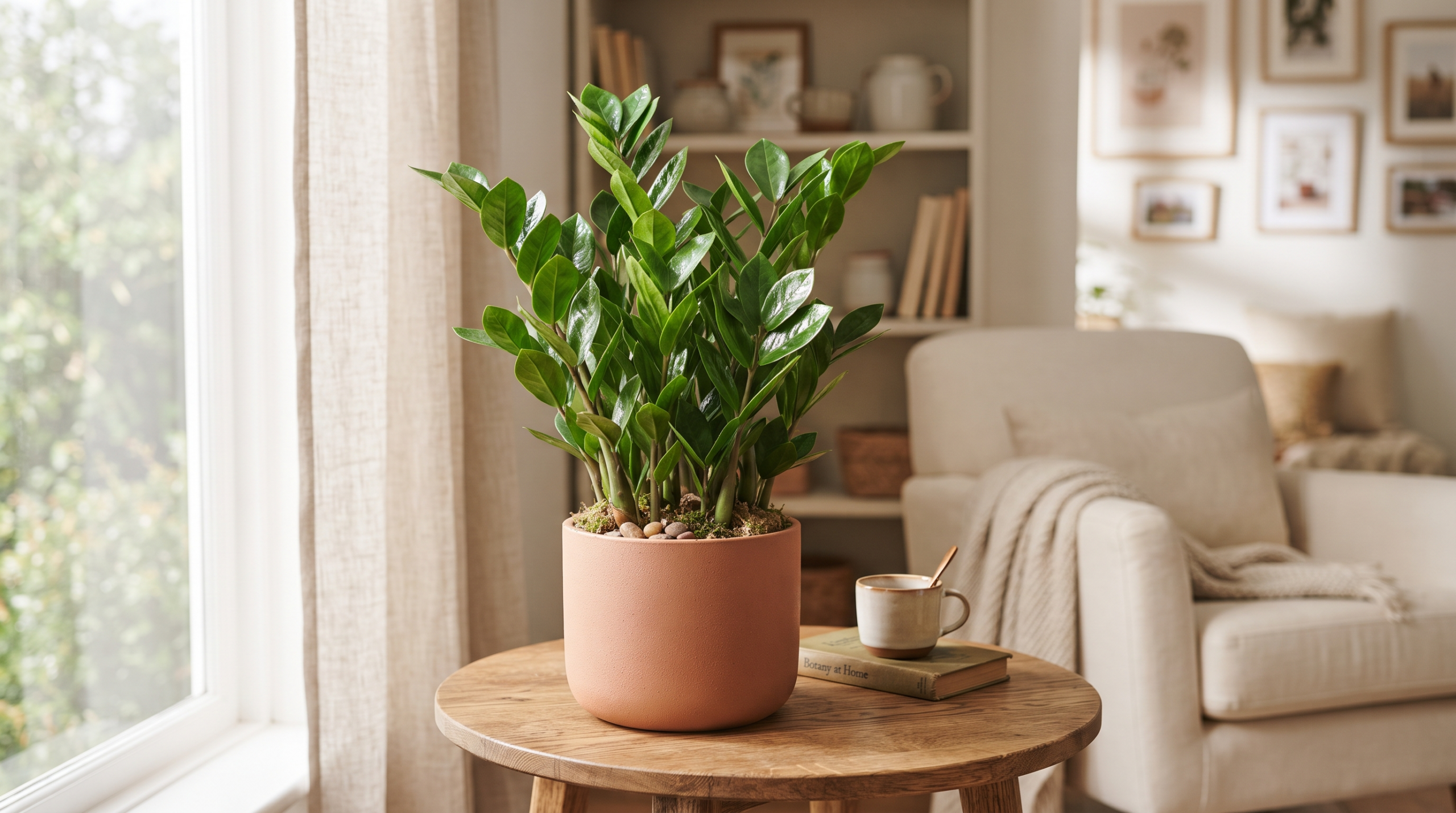
If you've ever killed a plant by loving it a little too much, the ZZ plant is here to restore your confidence. This glossy, easygoing houseplant practically thrives on neglect, making it one of the most forgiving plants you can bring home. I keep one on a shadowy shelf where nothing else survives, and it just keeps growing.
Quick Facts
| Light | Bright indirect to low light; tolerates most spots |
| Water | Every 2–3 weeks, only when soil is dry |
| Soil | Well-draining potting mix |
| Difficulty | Very easy—great for beginners |
| Time to Maturity | Slow grower; several years to reach full size |
| USDA Zone | Grown indoors anywhere; outdoors only in zones 9–11 |
Light: Where to Put Your ZZ Plant
The ZZ plant (Zamioculcas zamiifolia) is famous for handling almost any light situation, which is why it's a favorite for tricky corners.
- Best growth: bright, indirect light a few feet from a window.
- Totally fine: medium to low light, including offices with only fluorescent light.
- Avoid: harsh, direct afternoon sun, which can scorch those glossy leaves.
If your ZZ starts stretching or leaning toward a window, it's asking for a bit more light. For more no-fuss options for dim spaces, check out low-light houseplants that won't die.
Watering: Less Is More
Here's the golden rule: when in doubt, don't water. ZZ plants store water in thick underground rhizomes, so they'd much rather be too dry than too wet.
How to water
- Wait until the soil is dry all the way through—usually every 2–3 weeks.
- Water thoroughly until it runs out the drainage holes, then empty the saucer.
- In winter, stretch the time between waterings even further.
Overwatering is the #1 way people harm this plant. If you want a solid foundation, read our guide on how to water houseplants. Yellowing leaves are often a watering signal—see yellow leaves on plants if that shows up.
Soil, Potting, and Repotting
ZZ plants aren't picky, but drainage matters most.
- Soil: a standard well-draining potting mix works great; add a handful of perlite for extra insurance.
- Pot: always use a container with drainage holes.
- Repotting: only every 2–3 years, or when the rhizomes start pushing against the pot. Move up just one pot size.
Because it grows slowly, you won't be repotting often—another reason this plant is so low-maintenance.
Humidity, Feeding, and Propagation
Average home humidity is perfectly fine for a ZZ plant, so there's no need to mist or fuss.
Feeding
Feed lightly with a balanced, diluted houseplant fertilizer once or twice during the spring and summer growing season. Skip feeding in fall and winter.
Propagation
ZZ plants are slow but doable to propagate:
- Division: at repotting time, gently separate the rhizomes into new pots.
- Leaf cuttings: place healthy leaves in water or moist soil—be patient, as roots and new rhizomes can take several months.
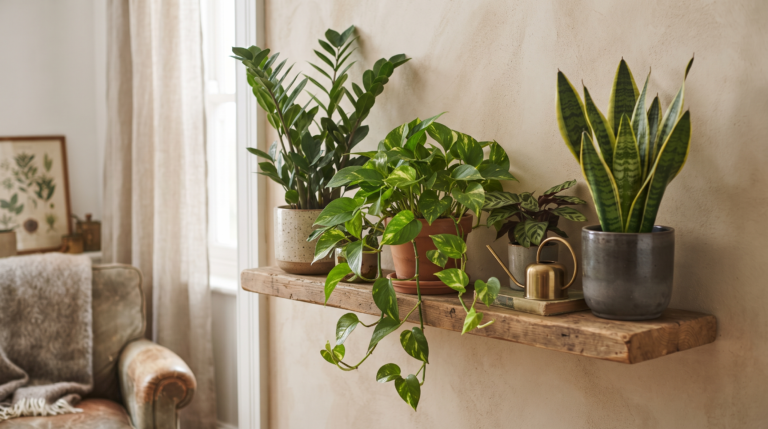
If you enjoy easy propagation, the pothos and snake plant are fun, low-effort companions to grow alongside your ZZ.
Tips
- Wipe the glossy leaves with a damp cloth now and then to keep them dust-free and shining.
- When unsure whether to water, wait a few more days—this plant forgives dryness, not sogginess.
- Keep it away from cold drafts and vents; it prefers normal room temperatures.
- All parts of the ZZ plant are toxic if eaten, so keep it away from curious pets and kids.
- Rotate the pot every few weeks so it grows evenly toward the light.
Common Problems
Yellowing leaves and mushy stems
This almost always means overwatering. Let the soil dry out fully, check for root rot, and water far less often going forward.
Leaves curling or turning brown at the tips
Usually a sign of underwatering or too much direct sun. Give it a thorough drink and move it out of harsh light.
Fungus gnats in the soil
These pests thrive in soggy soil, so let the top layer dry out. See how to get rid of fungus gnats for a full plan.
Leggy, stretched-out growth
Your ZZ wants more light. Move it closer to a bright window (still indirect) to encourage fuller, more upright stems.
Varieties to Try
- Classic ZZ (Zamioculcas zamiifolia) — the standard glossy green favorite
- Raven ZZ — dramatic near-black leaves that emerge bright green
- Zenzi — a compact, bushy dwarf variety perfect for small spaces
- Variegated ZZ — cream and green marbled leaves (rare and slower-growing)
- Lucky Classic — a fuller, more upright form of the standard ZZ