10 Low-Light Houseplants That Won’t Die
The first apartment I ever loved had exactly one north-facing window and a hallway so dim I kept a lamp on at noon. I was convinced I'd kill every plant I brought home—until I discovered that some houseplants actually shrug off low light like champs. If you've got a shadowy corner and a nervous heart, this list is for you.
Quick Facts
| Light | Low to medium indirect light; no direct sun required |
| Water | Most prefer to dry out partway between waterings |
| Soil | Well-draining houseplant mix |
| Difficulty | Beginner-friendly |
| Time to Maturity | Slow to moderate; most fill out over 1–2 years |
| USDA Zone | Grown indoors in any zone; outdoors only in warm zones (roughly 9–11), depending on your USDA zone |
What 'Low Light' Really Means
Before you pick a plant, let's clear up a myth: no houseplant grows in *no* light. "Low light" means a spot that's several feet from a window, or near a window that faces north, or one shaded by a building or tree.
A quick test: hold your hand a foot above where the plant will sit during the brightest part of the day.
- Sharp, crisp shadow = bright light
- Soft, fuzzy shadow = medium light
- Barely any shadow = low light
All the plants below tolerate that soft-to-barely-there range. They'll grow a little slower in dim spots, and that's perfectly normal—slower growth just means you'll water less often, too.
The 10 Plants That Won't Quit
Here are my ride-or-die low-light champions, roughly from toughest to slightly-fussier.
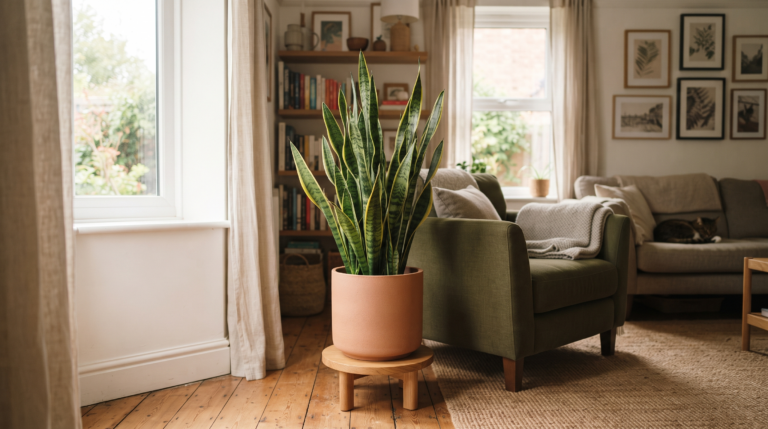
1. Snake Plant (Dracaena trifasciata)
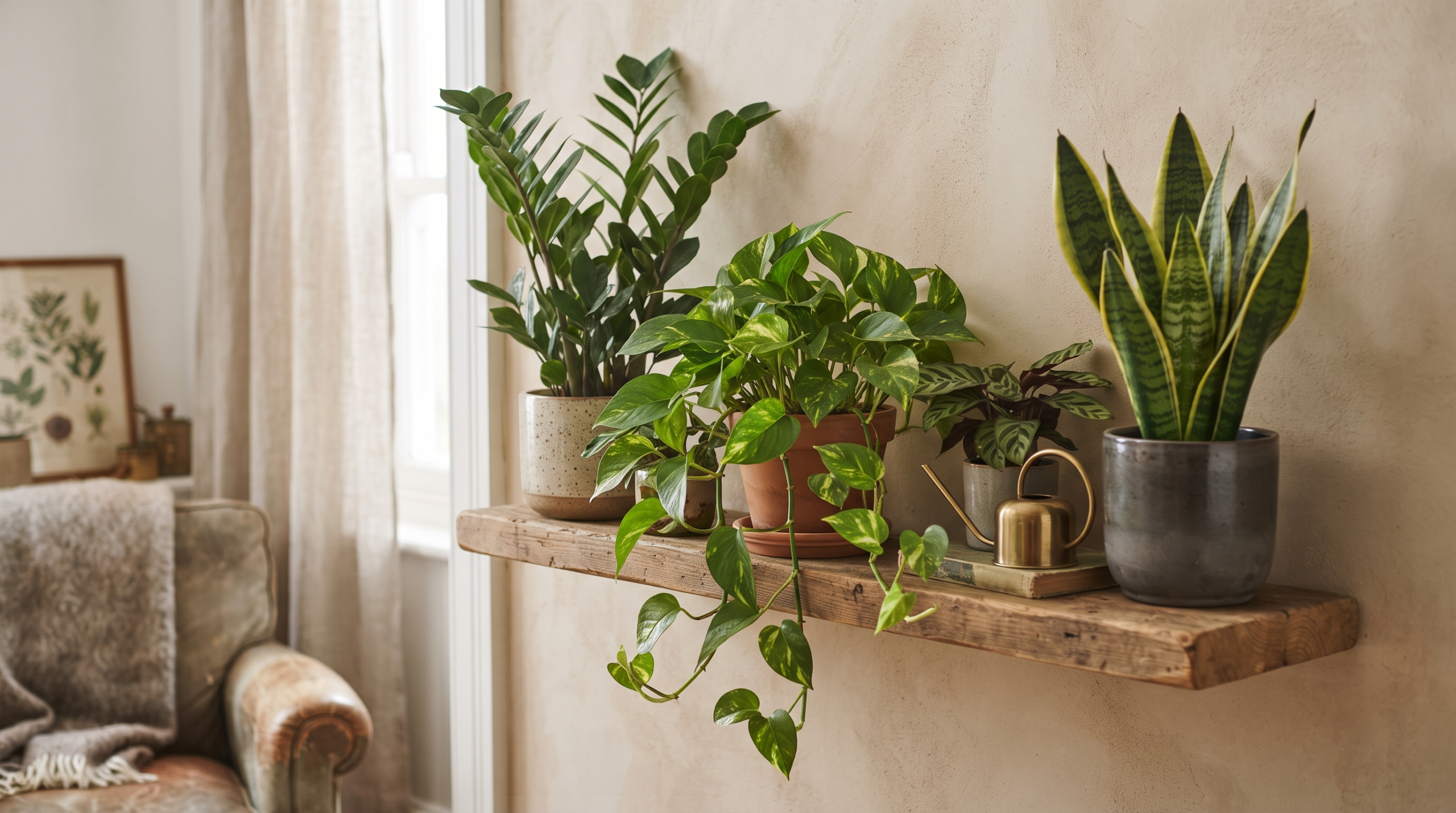
Nearly indestructible and happy in a dark hallway. It stores water in its stiff leaves, so it forgives forgetful waterers. Full details in our snake plant care guide.
2. ZZ Plant (Zamioculcas zamiifolia)
Glossy, upright, and drought-proof thanks to underground rhizomes. See our ZZ plant care guide for repotting tips.
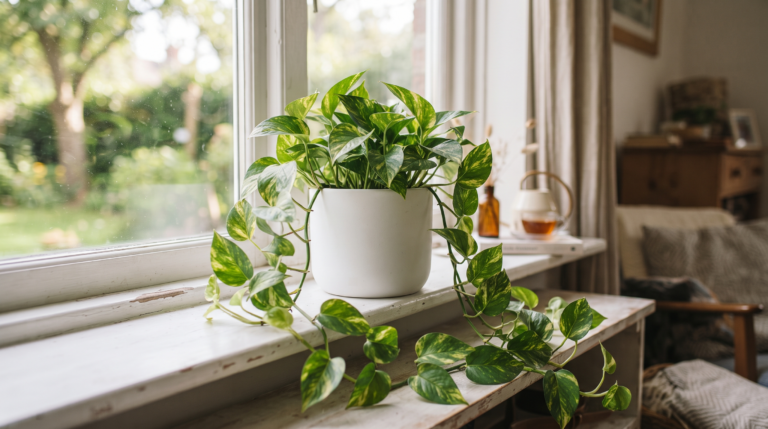
3. Pothos
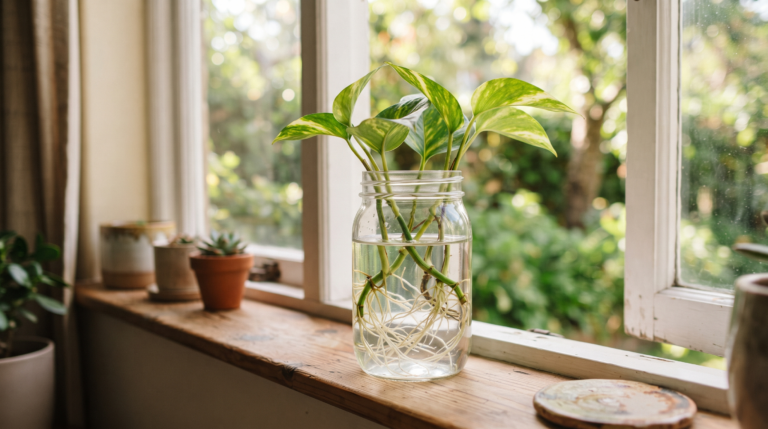
The classic beginner vine—trails beautifully and roots in a glass of water. Start with how to care for a pothos, then try propagating it in water for free plants.
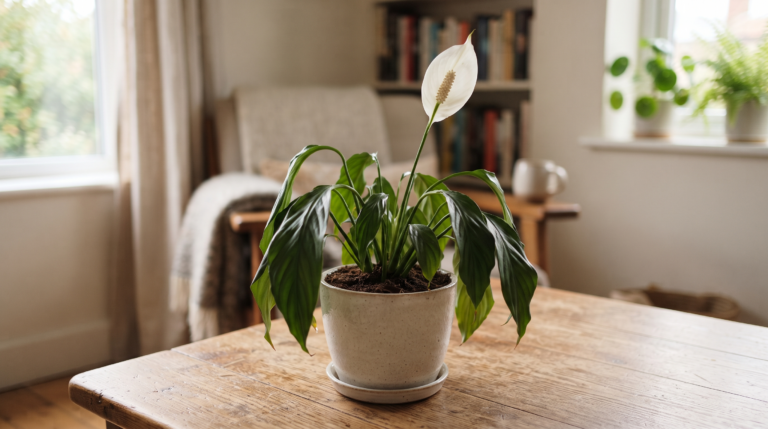
4. Peace Lily
One of the few low-light plants that flowers. It'll dramatically flop when thirsty (then perk right back up)—here's why your peace lily is drooping.
5. Cast Iron Plant (Aspidistra elatior)
Named for its toughness. Handles deep shade and neglect with quiet dignity.
6. Chinese Evergreen (Aglaonema)
Gorgeous patterned leaves; the green-heavy varieties handle the least light.
7. Philodendron (Heartleaf)
A soft-leaved cousin of pothos with the same easygoing nature.
8. Spider Plant
Produces baby "pups" you can snip and pot up. Tolerates lower light, though variegation fades a bit.
9. Dracaena (Janet Craig / Lisa)
Upright, tree-like, and comfortable in offices with weak light.
10. Parlor Palm (Chamaedorea elegans)
A Victorian favorite that brings feathery, tropical softness to dim corners.
Watering, Soil, and Placement
The number one way beginners lose these plants isn't darkness—it's overwatering. In low light, plants drink slowly, so soggy soil sits around and rots the roots.
Watering rhythm
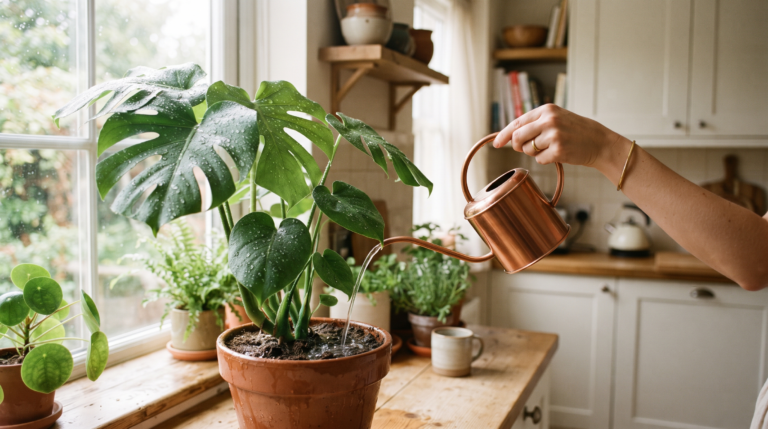
- Stick a finger 1–2 inches into the soil. If it's dry, water thoroughly until it runs from the drainage hole. If it's damp, wait a few days.
- In a dim spot, this might mean watering every 10–21 days—much less than a sunny plant. When in doubt, our guide to watering houseplants walks through it.
Soil and pots
- Use a well-draining houseplant mix.
- Always pick a pot with a drainage hole. This one rule prevents most beginner heartbreak.
Placement
- Rotate the pot a quarter-turn every week or two so growth stays even.
- Keep plants away from cold drafts and heating vents.
- Wipe dusty leaves now and then—dust blocks the little light they do get.
Humidity, Repotting, and Propagation
Most of these plants are relaxed about humidity, but a few appreciate a boost.
Humidity
- Palms and peace lilies enjoy a little extra moisture; grouping plants together or setting them on a pebble tray helps.
- Snake plants and ZZ plants don't care at all—average home air is fine.
Repotting
- Repot every 1–2 years, or when roots circle the bottom or poke out the drainage hole.
- Move up just one pot size. An oversized pot holds extra wet soil and invites rot.
Easy propagation
- Pothos, philodendron, spider plant: snip a healthy stem or pup and root it in water.
- Snake plant, ZZ: divide the root ball or use leaf cuttings (patience required—these are slow).
Propagation is the fun part—free plants for friends and every other dim corner of your home.
Tips
- When unsure whether to water, wait. These plants tolerate dry far better than soggy.
- Choose deep green varieties over heavily variegated ones for the darkest spots.
- A cheap clip-on grow light can turn a hopeless corner into a happy one.
- Dust the leaves monthly so they can absorb what little light reaches them.
- Rotate pots regularly to keep growth from leaning toward the window.
- Skip fertilizer in winter—slow-growing, low-light plants barely need feeding.
Common Problems
Yellowing leaves
Usually overwatering in low light. Let the soil dry more between waterings and confirm the pot drains. See yellow leaves on plants for more causes.
Leggy, stretched growth
The plant is reaching for light. Move it closer to a window, add a small grow light, and prune the leggy stems to encourage bushiness.
Tiny flying bugs in the soil
Fungus gnats love constantly damp soil. Let the top inch dry out completely and check our guide to getting rid of fungus gnats.
Brown, crispy leaf tips
Often low humidity or mineral buildup from tap water. Try a pebble tray and water with filtered or rested water.
Varieties to Try
- Snake Plant 'Laurentii' (yellow-edged, very tough)
- ZZ Plant 'Raven' (near-black glossy leaves)
- Pothos 'Jade' (solid green, best for dim spots)
- Aglaonema 'Silver Bay' (silvery patterned foliage)
- Heartleaf Philodendron (classic trailing green)
- Parlor Palm (feathery, compact, low-light friendly)