Why Is My Peace Lily Drooping? (Causes & Fixes)
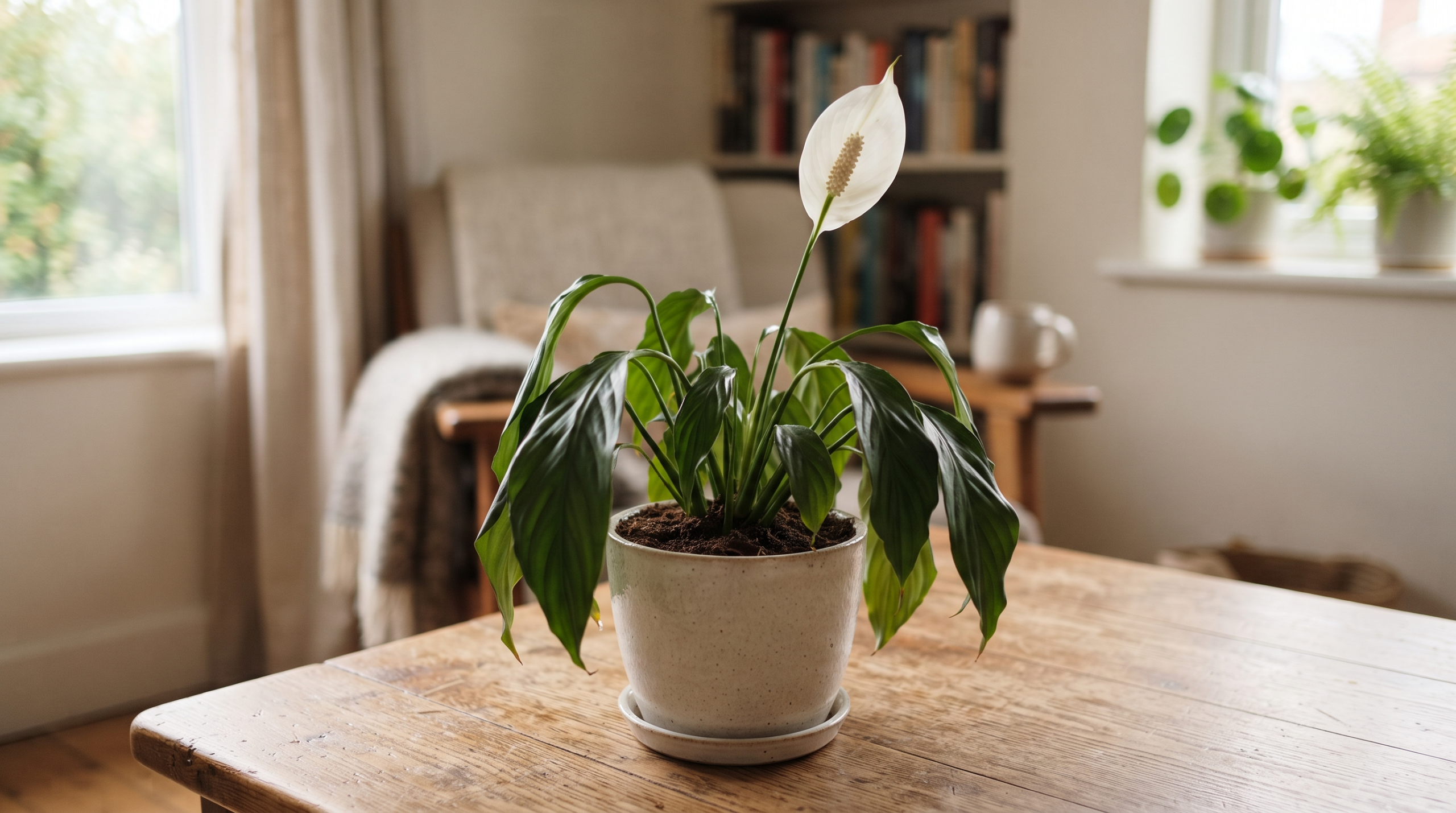
The first time my peace lily flopped over dramatically, I panicked and thought I'd killed it—only to watch it perk back up within hours of a good drink. Peace lilies are wonderfully expressive plants, and that droop is usually them 'talking' to you rather than dying on you. Once you learn to read the signs, this becomes one of the easiest houseplants to keep happy.
Quick Facts
| Light | Bright indirect light; tolerates medium to low light |
| Water | Keep soil lightly moist; water when the top inch feels dry |
| Soil | Well-draining, peat-based potting mix |
| Difficulty | Beginner-friendly |
| Time to Maturity | Reaches mature size in 1–3 years |
| USDA Zone | Grown as a houseplant everywhere; outdoors only in USDA zones 10–12 |
Step 1: Read the Droop (Identify the Symptom)
Before you fix anything, look closely at *how* your peace lily is drooping. The plant tells you a lot through the pattern.
- Whole plant collapsed, leaves soft and floppy: Almost always thirst. This is the classic peace lily faint.
- Leaves droop but stay firm, with yellowing: Often overwatering or soggy roots.
- Drooping with crispy brown leaf tips or edges: Usually low humidity, tap-water salts, or underwatering.
- Drooping only in one spot or after a move: Could be too much direct sun, a cold draft, or transplant stress.
Jot down what you see. The rest of this guide walks through causes in the order they're most likely.
Step 2: The Most Common Cause — Watering
Watering is behind the vast majority of peace lily droops, and it swings both ways.
Underwatering (the dramatic faint)
Peace lilies wilt hard and fast when dry, then bounce back once watered. To check, stick your finger an inch into the soil. If it's dry and the pot feels light, that's your answer.
Fix:
- Water thoroughly until it drains from the bottom.
- Let the excess drain fully—never leave the pot sitting in water.
- Most plants perk up within 2–24 hours.
Overwatering (the sneaky one)
If the soil is soggy and the leaves droop *and* yellow, the roots may be suffocating. Constantly wet soil leads to root rot, which prevents the plant from drinking even though water is everywhere.
Fix:
- Stop watering and let the top inch or two dry out.
- Make sure the pot has drainage holes.
- If it smells sour or roots look mushy and brown, repot into fresh well-draining mix and trim rotted roots.
If watering feels like guesswork, our guide on how to water houseplants breaks down the finger test and more.
Step 3: Light, Temperature, and Humidity
If watering checks out, look at the plant's environment.
Light
Peace lilies love bright indirect light but tolerate lower light better than most plants. Too much direct sun can scorch leaves and cause drooping; deep darkness can leave them weak and floppy.
- Move to a spot with filtered light near a window, but out of harsh midday rays.
- If your home is dim, peace lilies are on the shortlist of low-light houseplants that won't die.
Temperature
These are tropical plants. They sulk below about 55°F and hate cold drafts from doors, windows, or AC vents. Keep them in the 65–80°F range.
Humidity
Dry indoor air (especially in winter heating season) can cause drooping and crispy tips. Group plants together, use a pebble tray, or run a small humidifier.
Step 4: Roots, Repotting, and Water Quality
Sometimes the droop is a longer-term signal.
Root-bound plant
If your peace lily dries out within a day or two of watering, roots may have filled the pot with little soil left to hold moisture.
Fix:
- Gently slide the plant out; circling, dense roots mean it's time to size up.
- Repot into a container just 1–2 inches wider, using fresh potting mix.
Water quality
Peace lilies are sensitive to fluoride, chlorine, and salt buildup, which shows up as brown tips.
Fix:
- Use filtered or rainwater, or let tap water sit out overnight before using.
- Once in a while, flush the soil by running water through it to rinse out mineral buildup.
If you enjoy this level of hands-on care, you might also like the equally forgiving pothos and snake plant.
Step 5: Prevention (Keep the Droop Away)
Once your peace lily recovers, a simple routine keeps it upright.
- Check before you water. Test the top inch of soil rather than watering on a fixed schedule.
- Right pot, right drainage. Always use a container with drainage holes.
- Consistent spot. Avoid moving it between hot windows and cold drafts.
- Wipe the leaves. Dust blocks light; a gentle wipe keeps them breathing.
- Feed lightly. A diluted balanced houseplant fertilizer during the growing season is plenty.
With a steady rhythm, your peace lily will droop far less often—and when it does, you'll know exactly what it needs.
Tips
- A peace lily that faints from thirst usually recovers fully within a day—don't overcorrect by drowning it.
- Let tap water sit out overnight to dissipate chlorine before watering.
- Brown crispy tips almost always point to low humidity or mineral buildup, not disease.
- Repot in spring when roots crowd the pot, moving up just one pot size.
- Peace lilies droop slightly before they truly need water—use it as a natural reminder.
Common Problems
Whole plant collapsed and leaves are soft
This is classic thirst. Water thoroughly until it drains out the bottom, let excess drain away, and the plant should perk up within a few hours.
Leaves droop and turn yellow with soggy soil
Likely overwatering or root rot. Stop watering, let the soil dry out, check drainage, and repot into fresh mix if roots smell sour or feel mushy.
Drooping with brown, crispy leaf tips
Usually low humidity or salt/fluoride buildup. Boost humidity, switch to filtered or rested water, and occasionally flush the soil.
Sudden droop after moving the plant
Check for direct sun scorch or cold drafts. Relocate to bright indirect light in a stable 65–80°F spot and give it time to adjust.
Varieties to Try
- 'Mauna Loa' – a popular, reliable large-leaved classic
- 'Sensation' – impressively large, can reach several feet tall
- 'Domino' – variegated leaves splashed with white
- 'Petite' – compact, great for small spaces and desks
- 'Wallisii' – smaller, free-flowering standard variety