How to Care for a Pothos (Beginner’s Guide)
If you're worried you'll somehow kill yet another houseplant, take a deep breath—pothos might be the most forgiving plant you'll ever own. It's the plant I hand to friends who swear they have a "black thumb," and it almost always thrives anyway. With just a little light and the occasional drink of water, you'll have trailing green vines in no time.
Quick Facts
| Light | Bright indirect light; tolerates low light |
| Water | When top 1–2 inches of soil feel dry |
| Soil | Well-draining indoor potting mix |
| Difficulty | Very easy—great for beginners |
| Time to Maturity | Vines lengthen noticeably over 3–6 months |
| USDA Zone | Indoors anywhere; outdoors only in zones 10–12 |
Why Pothos Is Perfect for Nervous Beginners
Maybe you've overwatered a fern into mush or watched a fussy plant drop every leaf. Pothos is different—it's genuinely hard to kill, and it *tells you* when it's unhappy long before things get dire.
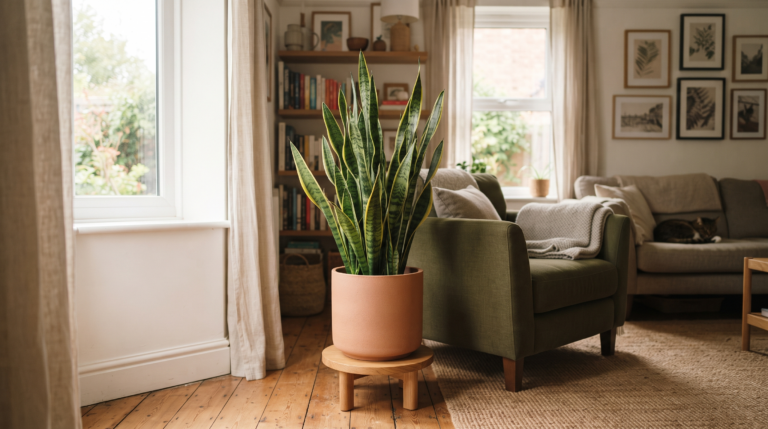
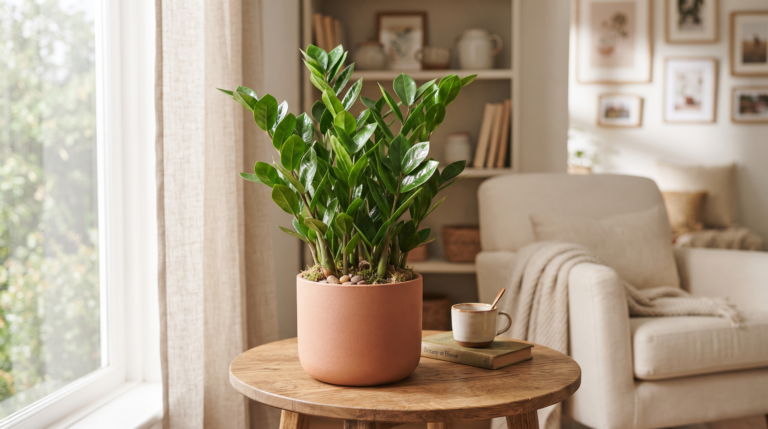
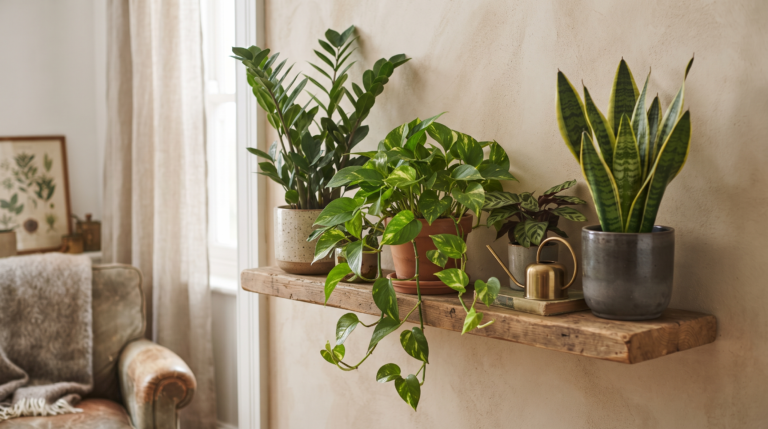
A thirsty pothos will droop dramatically, then perk right back up within hours of watering. That built-in warning system makes it one of the best confidence-builders in the plant world, right alongside a snake plant or a ZZ plant.
If you've been scared off gardening before, this is the plant that changes your mind.
Common Problems (and Quick Fixes)
Let's tackle worries early so you can relax. Most pothos troubles come down to watering and light—both easy to adjust.
The usual suspects
- Yellow leaves almost always mean overwatering. Let the soil dry out more between drinks.
- Brown, crispy leaf edges point to dry air or inconsistent watering.
- Leggy vines with sparse leaves mean your plant wants more light.
Most of these are reversible, so don't panic if you spot one.
Light, Water, and the Right Pot
Light
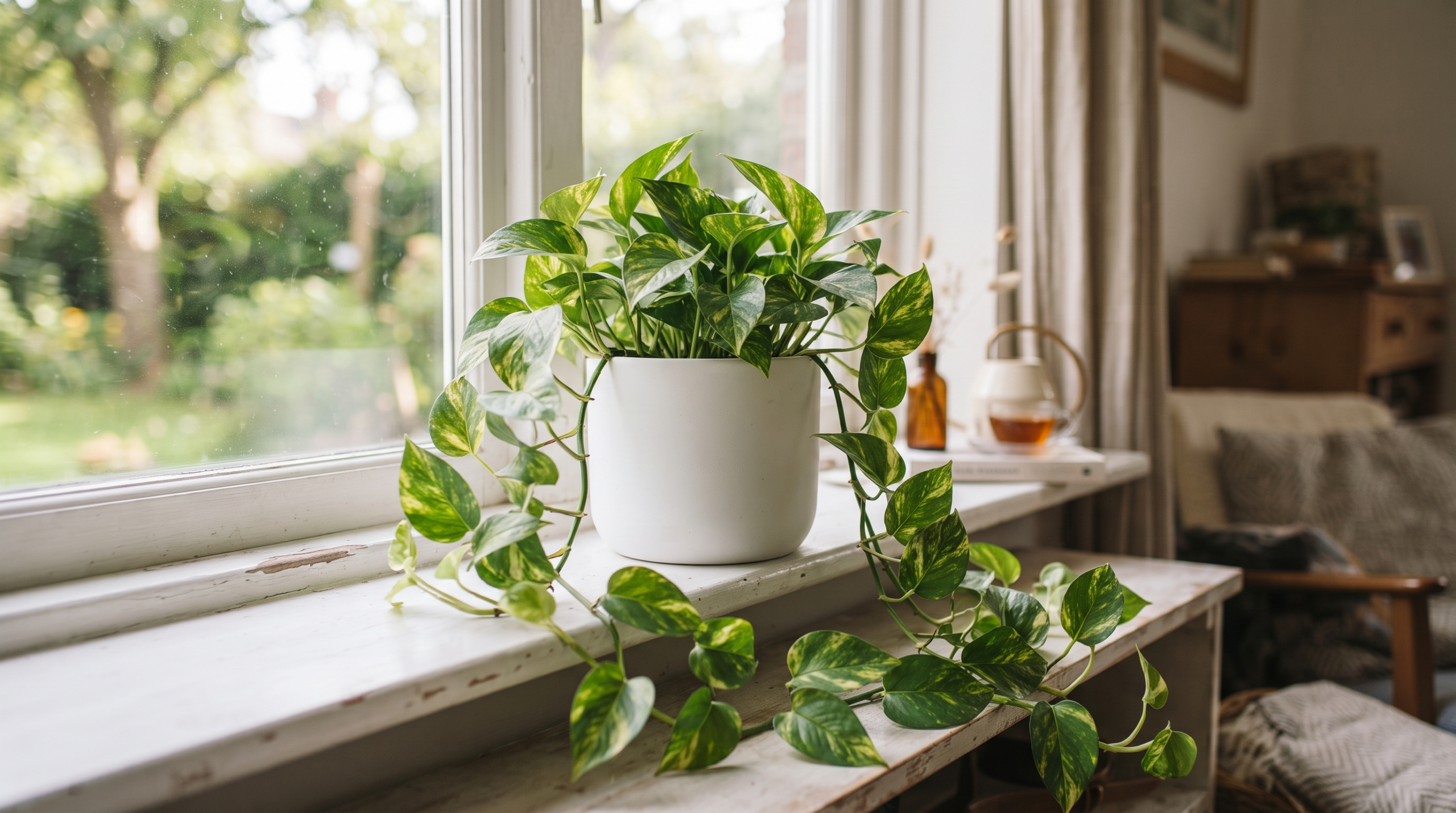
Pothos is happiest in bright, indirect light—think a few feet back from a sunny window. It will also survive in low light, though growth slows and variegated types may fade to plain green. Avoid harsh direct sun, which can scorch the leaves.
Water
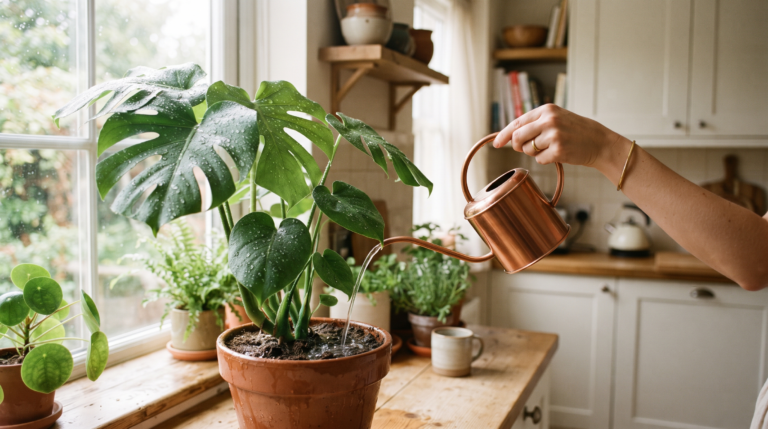
This is where beginners go wrong, so keep it simple: water only when the top 1–2 inches of soil feel dry. Poke a finger in to check. Then water thoroughly until it drains from the bottom, and empty the saucer. If you're unsure of your rhythm, our guide on how to water houseplants walks you through it.
Pot and soil
Use a pot with a drainage hole—this one detail prevents most root rot. A standard well-draining indoor potting mix is perfect. Pothos actually likes being a little snug in its pot.
Humidity, Repotting, and Easy Propagation
Humidity
Pothos tolerates normal household air just fine. A little extra humidity (a nearby humidifier or grouping plants together) keeps leaf edges from browning, but it's not required.
Repotting
Repot every 1–2 years, or when roots poke out of the drainage hole. Move up just one pot size and refresh the soil.
Propagation
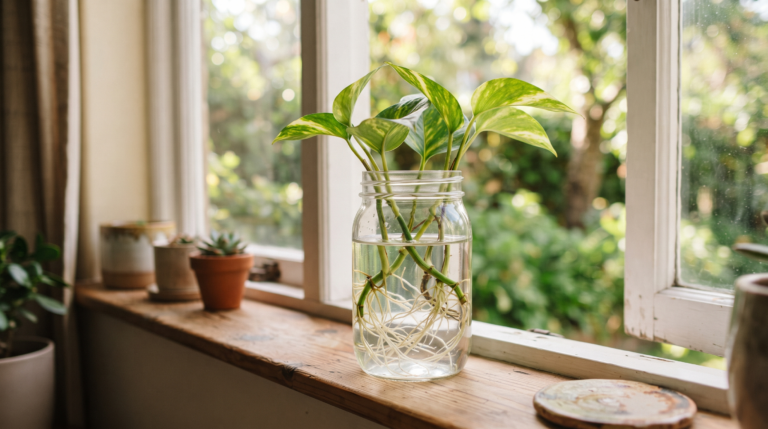
Here's the fun part: pothos roots almost effortlessly in water. Snip a vine below a node, drop it in a glass, and watch roots appear in a couple of weeks. See our step-by-step guide on how to propagate pothos in water to turn one plant into many free ones.
Tips
- When in doubt, wait a day before watering—pothos forgives underwatering far more than overwatering.
- Wipe dust off the leaves occasionally so they can soak up light.
- Rotate the pot a quarter turn every week or two for even, bushy growth.
- Pinch or trim leggy vines to encourage fuller growth.
- Variegated types need brighter light to keep their patterns.
- Save your trimmings—they root easily and make great gifts.
Common Problems
Yellowing leaves
Usually overwatering. Let the top few inches of soil dry out, check that your pot drains, and cut back on watering frequency. See more in our guide to yellow leaves on plants.
Drooping, limp vines
Often thirst—water thoroughly and the plant typically recovers within hours. If soil is soggy instead, the cause is overwatering, not underwatering. (Peace lilies droop too—see why is my peace lily drooping.)
Tiny flying bugs in the soil
These are likely fungus gnats from overly wet soil. Let the surface dry between waterings and check our guide on how to get rid of fungus gnats.
Leggy vines with few leaves
Move the plant closer to a bright, indirect light source and trim back long, bare stems to encourage fuller growth.
Varieties to Try
- Golden Pothos — classic green-and-yellow, nearly indestructible
- Marble Queen — creamy white and green variegation
- Neon Pothos — bright chartreuse leaves that glow in a room
- Jade Pothos — solid deep green, great for lower light
- Pearls and Jade — compact, speckled white-and-green leaves
- Cebu Blue — silvery blue-green, arrow-shaped leaves