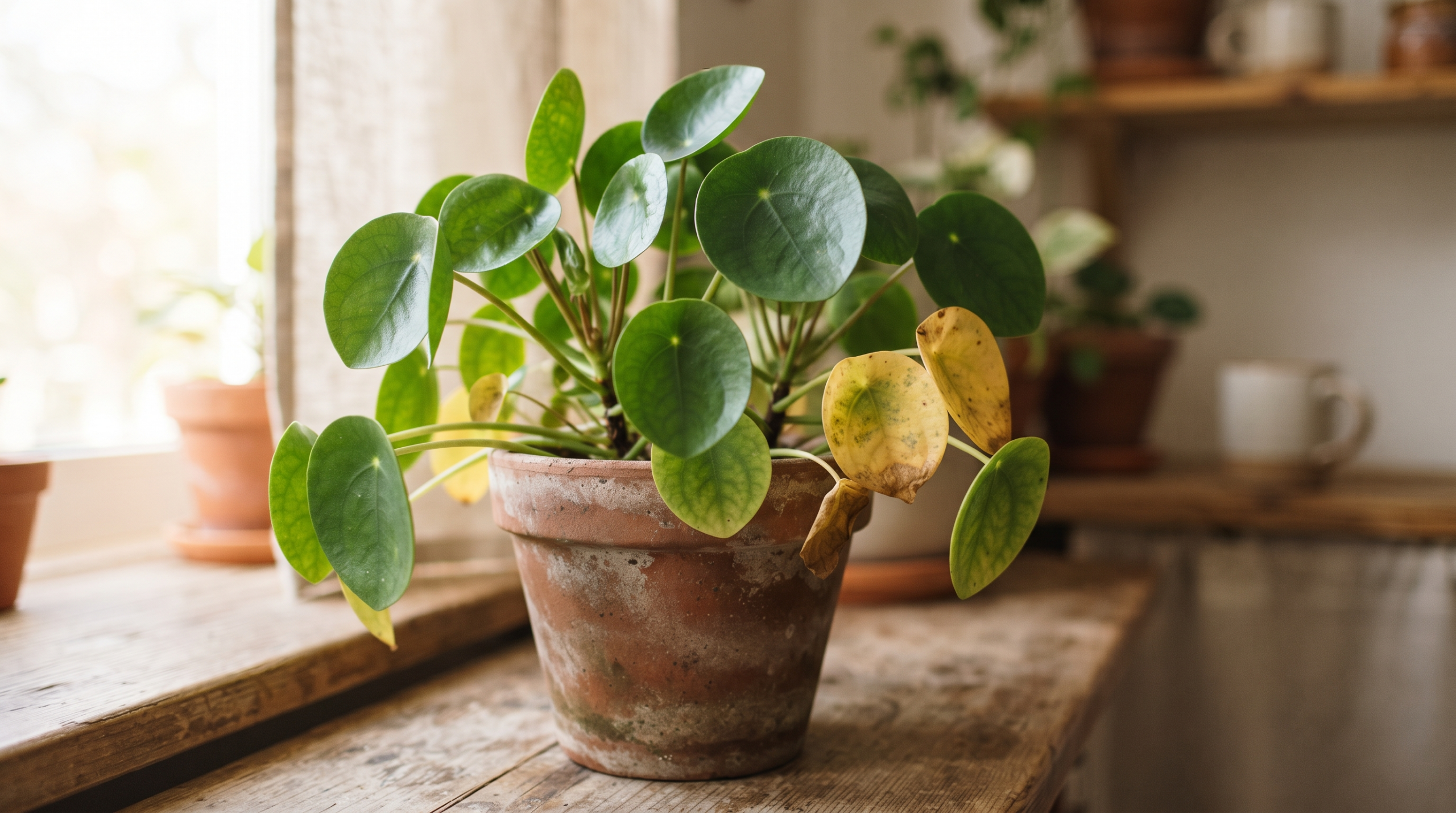
Yellow Leaves on Plants: Causes and Fixes
The first time I noticed a yellow leaf on my favorite pothos, my stomach dropped—I was sure I'd killed it. After years of gardening (and a few genuinely dead plants), I've learned that yellow leaves are simply your plant's way of talking to you. Once you know how to listen, the fix is usually easier than you'd think.
Quick Facts
| Light | Most houseplants: bright indirect light; check each plant's needs |
| Water | When the top 1–2 inches of soil feel dry for most tropicals |
| Soil | Well-draining potting mix that holds some moisture but never stays soggy |
| Difficulty | Beginner-friendly diagnosis |
| Time to Maturity | Yellowing can improve in days to weeks once the cause is fixed |
| USDA Zone | Indoors anywhere; outdoors depends on your USDA zone (find yours first) |
Step 1: Read the Symptoms
Before you change anything, slow down and look closely. Yellowing tells a different story depending on *which* leaves are affected and *how* they yellow.
Where is the yellowing?
- Lower, older leaves yellowing one at a time: often normal aging, or a watering issue.
- New growth pale or yellow: possible nutrient or light problem.
- All-over, sudden yellowing: usually a big change—overwatering, cold draft, or shock after repotting.
What does the leaf feel like?
- Soft, limp, yellow: leans toward overwatering.
- Crispy, dry, yellow-to-brown edges: leans toward underwatering or low humidity.
Take a quick photo so you can track whether things improve after you make a change.
Step 2: Track Down the Cause
Most yellow leaves trace back to one of these common culprits.
Watering (the #1 cause)
Overwatering is far more common than underwatering. Soggy soil suffocates roots, and stressed roots can't feed the leaves. If the soil is wet and the leaves are yellow and mushy, this is your likely answer. A gentle, consistent routine helps—see our guide on how to water houseplants.
Light
Too little light causes weak, pale, yellowing growth; too much harsh direct sun can bleach and yellow leaves. If your plant lives in a dim corner, it may simply be hungry for more brightness.
Nutrients
After many months in the same pot, plants can run low on nutrients, and older leaves yellow first as the plant moves resources to new growth.
Stress and environment
Cold drafts, sudden temperature swings, or recent repotting can all trigger yellowing. Some plants also droop *and* yellow when unhappy—if yours is a peace lily, take a look at why is my peace lily drooping.
Step 3: Fix It, Step by Step
Once you have a suspect, work through these fixes calmly. Change one thing at a time so you know what worked.
If it's overwatering
1. Stop watering immediately. 2. Feel the soil—wait until the top 1–2 inches are dry before watering again. 3. Check that the pot has a drainage hole. If it doesn't, that's your fix right there. 4. If the soil smells sour or roots look brown and mushy, repot into fresh, well-draining mix.
If it's underwatering
1. Water thoroughly until it drains from the bottom. 2. Empty the saucer after a few minutes. 3. Set a loose reminder to check the soil more often.
If it's light
- Move the plant to a brighter spot with indirect light, or a few feet back from a bright window if it was getting scorched.
- Prefer a tough, forgiving plant for tricky corners? A snake plant tolerates a wide range of conditions.
If it's nutrients
- Feed with a balanced, diluted houseplant fertilizer during the active growing season, following the label. Less is more—over-fertilizing causes its own problems.
One last thing: you don't need to save every yellow leaf. Once a leaf turns fully yellow, it won't turn green again. You can gently remove it so the plant focuses energy on healthy growth.
Step 4: Prevent It Going Forward
A few simple habits prevent most future yellowing.
- Check before you water. Stick a finger 1–2 inches into the soil every few days instead of watering on a fixed schedule.
- Match the plant to the spot. A plant in the right light needs far less rescuing. Easygoing choices like pothos forgive beginner mistakes.
- Use pots with drainage holes and a well-draining mix.
- Keep plants away from cold drafts, heaters, and AC vents.
- Feed lightly during the growing season and ease off in fall and winter.
- Observe weekly. Catching one yellow leaf early beats discovering ten.
Tips
- Change only one care variable at a time so you can tell what actually helped.
- Lift the pot before and after watering—learning its 'heavy' and 'light' weight is a great watering cue.
- A fully yellow leaf won't recover; trim it so the plant can focus elsewhere.
- Most yellowing improves slowly—give the plant a couple of weeks before judging your fix.
- Group humidity-loving plants together to buffer against dry indoor air.
Common Problems
Lower leaves yellow and mushy, soil stays wet
Classic overwatering. Let the top 1–2 inches dry out, confirm the pot drains, and repot into fresh mix if roots smell sour or look brown.
Leaf edges yellow then crispy brown, soil bone dry
Underwatering or low humidity. Water thoroughly until it drains out the bottom and check the soil more frequently going forward.
New growth pale or yellow in a dim room
Too little light. Move to a spot with bright indirect light and consider a more low-light-tolerant plant for dark corners.
Older leaves slowly yellowing after a year in the same pot
Likely depleted nutrients. Feed with a diluted balanced houseplant fertilizer during the growing season and consider repotting.
Varieties to Try
- Pothos—yellows fast when overwatered, making it a great early-warning plant
- Peace lily—dramatic droop and yellow leaves signal thirst or overwatering
- Snake plant—yellowing usually points straight to overwatering
- Monstera—older leaves may yellow naturally as new ones unfurl
- Spider plant—yellow tips often mean water quality or low humidity
- ZZ plant—rarely yellows unless seriously overwatered