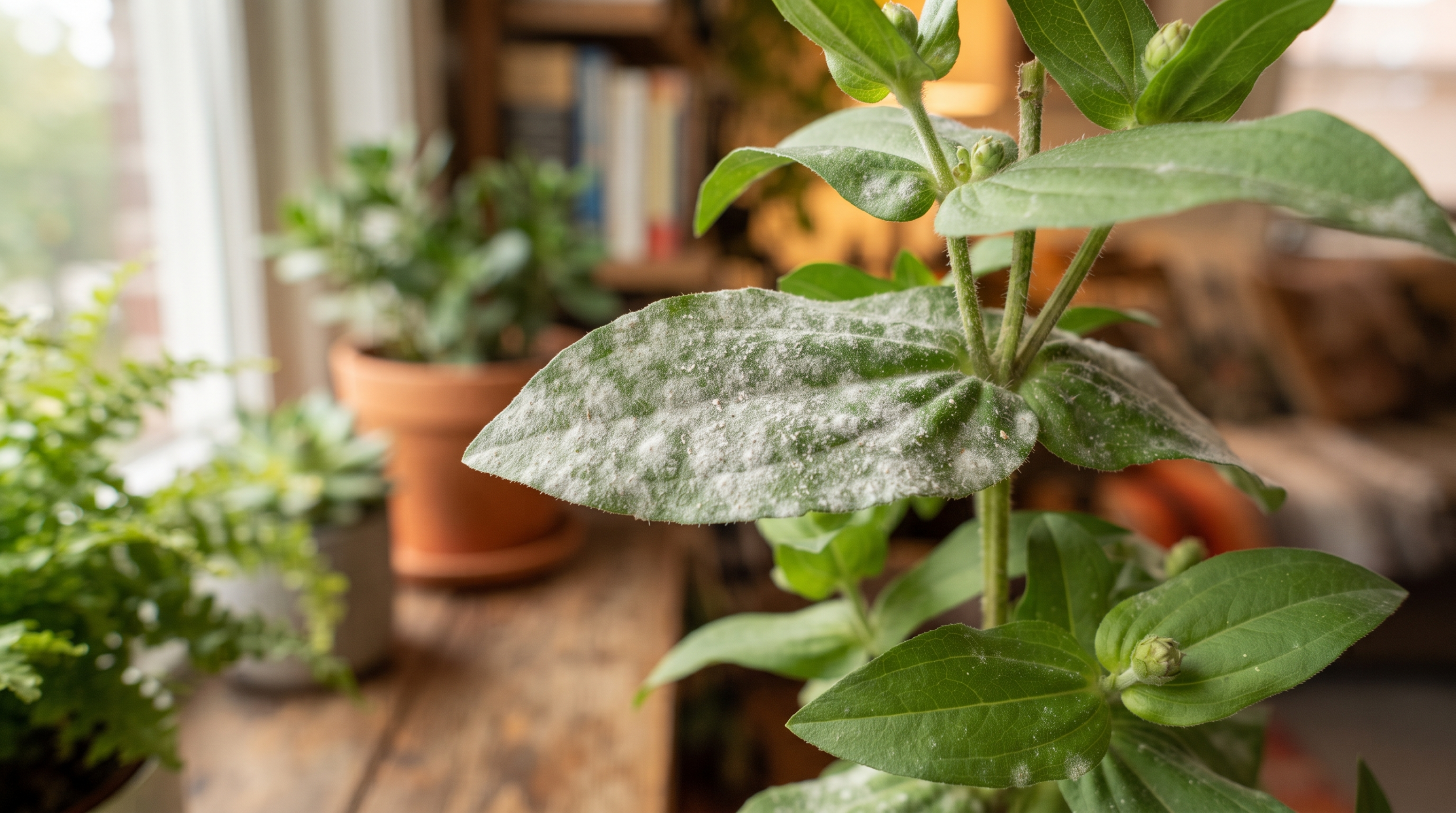
Powdery Mildew: How to Identify and Treat It
That dusty white coating on your plant's leaves isn't dust you can wipe away and forget—it's powdery mildew, one of the most common fungal problems beginners run into. The good news? It's very treatable, and once you know what to look for, you can stop it early. Let's walk through spotting it, understanding why it showed up, and getting your plant healthy again.
Quick Facts
| Light | Bright, even light; most affected plants prefer good sun or bright indirect light |
| Water | Water the soil, not the leaves; let the surface dry between waterings |
| Soil | Well-draining mix; avoid soggy, crowded root zones |
| Difficulty | Easy to treat when caught early |
| Time to Maturity | Visible improvement in 1–2 weeks with consistent treatment |
| USDA Zone | Occurs on indoor and outdoor plants across all USDA zones |
How to Identify Powdery Mildew
Powdery mildew is usually easy to spot once you know the signs. Look for:
- White or gray powdery patches on the tops of leaves, stems, or buds—it looks like someone dusted flour over the plant.
- Patches that spread and merge over time, eventually covering large sections of a leaf.
- Yellowing, curling, or distorted leaves as the infection progresses.
- Stunted new growth or flower buds that fail to open properly.
Unlike ordinary dust, powdery mildew doesn't fully wipe off, and it comes right back. It's easy to confuse with other issues—if your leaves are yellowing but you don't see white powder, check out yellow leaves on plants instead. And if your plant looks limp rather than dusty, the cause may be watering, like a drooping peace lily.
What Causes It
Powdery mildew is a fungal disease, and it thrives in a few specific conditions:
- Poor air circulation. Crowded plants or stagnant, still air let the fungus settle and spread.
- High humidity with dry leaves. Unlike many fungi, powdery mildew doesn't need wet leaves—it loves humid air combined with dry leaf surfaces.
- Low or uneven light. Plants in dim, shaded spots are more vulnerable.
- Overcrowding. Leaves touching each other trap moisture and pass the fungus along.
It often shows up when a plant is stressed or living in less-than-ideal conditions, which is why comparing your setup to the quick facts above is a helpful first step.
Step-by-Step: How to Treat It
Act quickly—powdery mildew spreads fast, but it responds well to treatment.
1. Isolate the plant. Move it away from your other plants so spores don't travel. 2. Remove the worst leaves. Snip off heavily coated leaves with clean scissors and throw them away (don't compost them). 3. Make a simple spray. Mix 1 teaspoon of baking soda plus a few drops of mild liquid soap into 1 quart of water. Or use a store-bought horticultural or neem oil spray. 4. Spray thoroughly. Coat the tops and undersides of leaves. Test on one leaf first and wait a day to make sure your plant tolerates it. 5. Repeat weekly. Reapply every 7–10 days until new growth comes in clean. 6. Improve conditions. Move the plant somewhere with better airflow and light while it recovers.
Hardy, forgiving plants tend to bounce back quickly—if you're looking for tough, low-maintenance options for the future, guides like snake plant care and pothos care are great places to start.
Preventing It From Coming Back
Keep the air moving
Space plants out so leaves aren't touching, and use a small fan or open a nearby window to keep air circulating.
Water smart
Water at the soil line rather than over the leaves, and water early in the day so any splashes dry quickly.
Give good light
Move vulnerable plants to brighter spots. Most affected plants do best in good sun or bright indirect light, depending on your USDA zone and setup.
Inspect regularly
Check new growth and leaf undersides weekly so you can catch the first dusty spots before they spread.
Tips
- Always test any spray on a single leaf and wait 24 hours before treating the whole plant.
- Never compost infected leaves—bag them and throw them in the trash.
- A small oscillating fan is one of the cheapest, most effective prevention tools.
- Disinfect your scissors between plants to avoid spreading spores.
- Treat in the morning so leaves dry before evening humidity rises.
Common Problems
The white patches keep coming back after treatment.
You likely stopped too early or missed leaf undersides. Reapply your spray every 7–10 days for at least three cycles and fix the root cause—usually poor airflow or low light.
It spread to my other plants.
Isolate every affected plant immediately, inspect neighbors for early spots, and increase spacing and air circulation throughout the area.
My spray damaged the leaves.
You may have used too strong a mix or sprayed in direct sun. Dilute further, spray in indirect light or morning, and always spot-test first.
Varieties to Try
- Powdery mildew on squash and cucumbers (outdoor edibles)
- Powdery mildew on roses and ornamentals
- Powdery mildew on indoor plants like begonias and African violets
- Powdery mildew on herbs such as basil and mint
- Powdery mildew on tomatoes and peppers