How to Propagate Pothos in Water
Propagating pothos in water is one of the most satisfying (and forgiving) things you can do as a new plant parent. All you need is a healthy vine, a jar of water, and a little patience while roots appear right before your eyes. Trust me: if you've ever felt nervous about killing a plant, this is the confidence-builder you've been waiting for.
Quick Facts
| Light | Bright indirect light |
| Water | Fresh room-temperature water, refreshed weekly |
| Soil | None to start; well-draining potting mix once potted |
| Difficulty | Very easy — great for beginners |
| Time to Maturity | Roots in 2–4 weeks; ready to pot in 4–6 weeks |
| USDA Zone | Indoors anywhere; outdoors only in USDA zones 10–12 |
How to Take Your Cutting
The whole process starts with a good cutting, and the secret is finding the node — the little bump on the stem where a leaf and roots emerge.
Step by step
- Choose a healthy vine with several leaves.
- Using clean scissors, snip about 1/4 inch below a node.
- Aim for a cutting with 2–4 leaves and at least one or two nodes.
- Remove the lowest leaf so a bare node will sit underwater.
That bare node is where your new roots will form, so it's the most important part. A cutting with no node will just sit in the water and never root.
Setting Up Your Water Jar
Pothos aren't picky, which is why they're such a rewarding first propagation project.
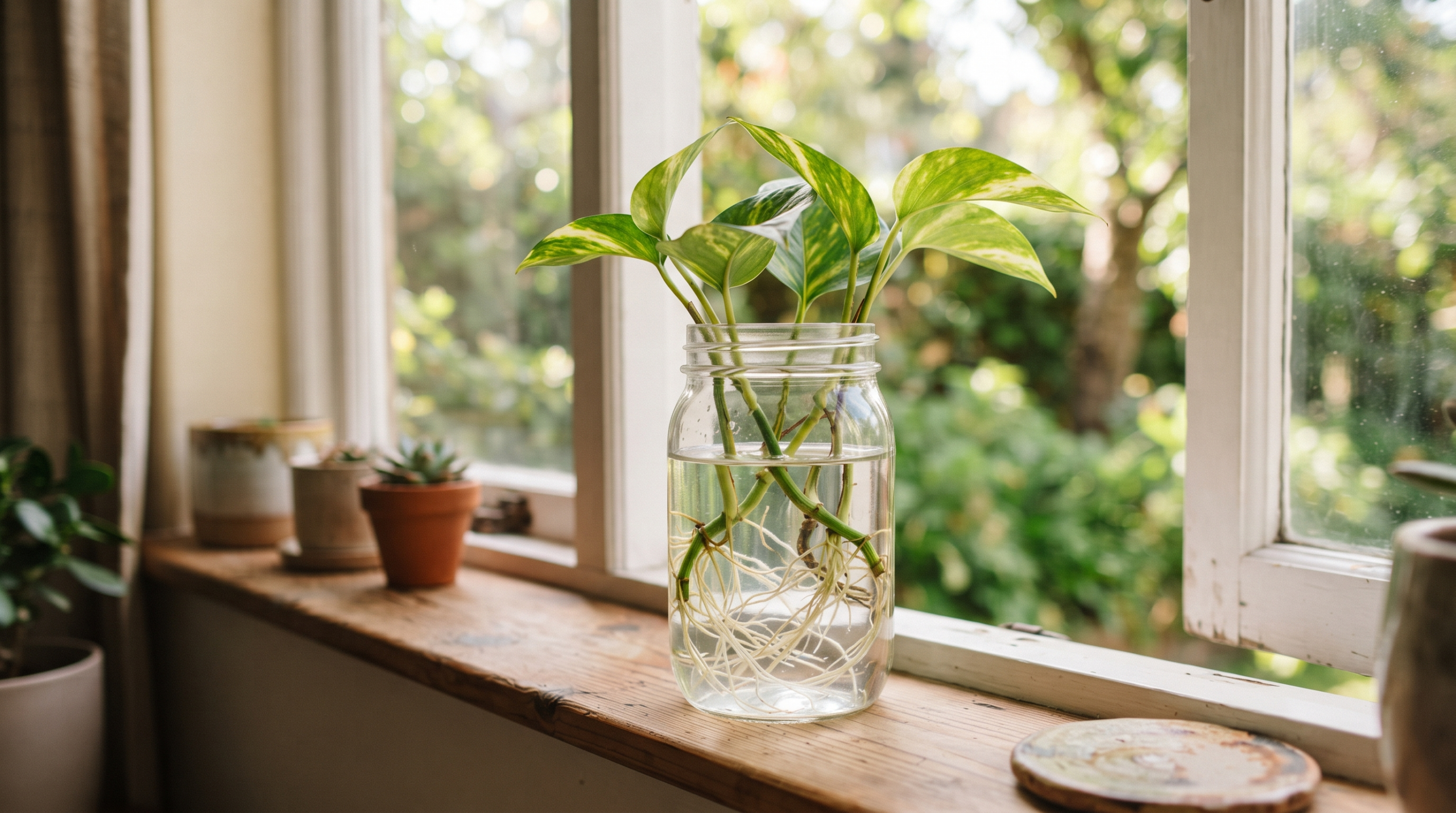
- Use any clear glass or jar so you can watch the roots grow.
- Fill it with room-temperature water — let tap water sit out overnight if your water is heavily chlorinated.
- Submerge the bare node(s), keeping the remaining leaves above the waterline.
- Place the jar in bright indirect light, not direct sun, which can cook the cutting and encourage algae.
Change the water about once a week to keep it fresh and oxygenated. If it looks cloudy sooner, swap it out. This gentle rhythm is a nice introduction to reading your plants — the same instinct helps with watering houseplants in general.
Waiting for Roots (and When to Pot Up)
This is the exciting part. You'll usually see tiny white root nubs within 2–4 weeks, and they'll grow longer over the following weeks.
Ready to pot
- Wait until roots are about 1–2 inches long.
- Move the cutting into a small pot with a well-draining potting mix.
- Water thoroughly, then keep the soil lightly moist (not soggy) for the first couple of weeks to ease the transition.
Water roots are slightly different from soil roots, so a little extra moisture at first helps your cutting adjust. Once it's established, treat it like any mature plant — our full pothos care guide walks you through the long-term routine.
Why Pothos Is the Perfect Beginner Plant
If propagation feels intimidating, pothos is here to reassure you. It roots readily, tolerates a range of light, and bounces back from neglect.
- It thrives in bright indirect light but survives lower light too, making it one of the friendliest low-light houseplants that won't die.
- Each cutting can become a whole new plant — or a fuller pot if you tuck several together.
- It's a forgiving way to practice plant care before moving on to fussier friends.
A quick note: pothos is mildly toxic if eaten, so keep cuttings away from curious pets and small children.
Tips
- Always include at least one node underwater — leaves alone won't root.
- Use clear glass so you can watch roots develop and spot cloudy water.
- Refresh the water weekly to keep oxygen levels up and algae down.
- Root several cuttings in one jar, then pot them together for a fuller plant.
- Bright indirect light speeds rooting; direct sun invites algae.
Common Problems
Cutting is mushy or slimy at the base
This is rot, usually from stale water or a bruised node. Trim back to healthy tissue, rinse the jar, and start with fresh water changed more often.
No roots after several weeks
Double-check that a node is submerged, not just a leaf stem. Move the jar to brighter indirect light and be patient — cool rooms slow things down.
Yellowing leaves on the cutting
A little yellowing is normal as the cutting adjusts, but widespread yellowing can signal old water or too much sun. See our guide on yellow leaves on plants for more.
Varieties to Try
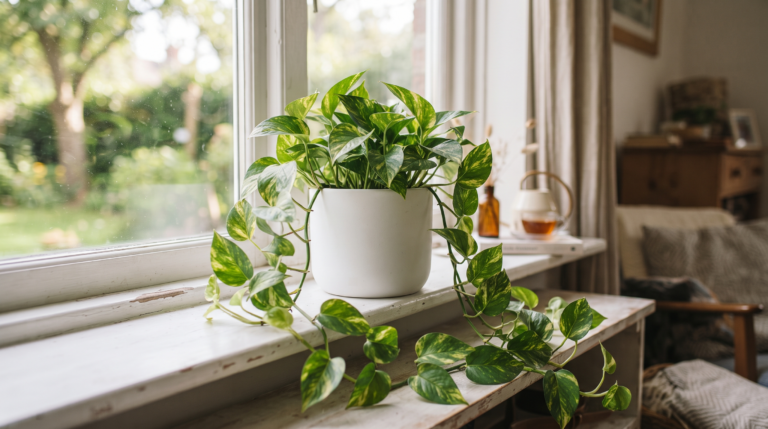
- Golden Pothos — classic green with yellow marbling
- Marble Queen — creamy white and green variegation
- Neon Pothos — bright chartreuse leaves
- Jade Pothos — solid deep green, very forgiving
- Pearls and Jade — compact with speckled edges