How to Get Rid of Fungus Gnats in Houseplants
The first time I noticed those tiny black bugs hovering around my favorite pothos, I thought I was imagining things. Then I watered the plant and a little cloud of them rose up like smoke. If you're waving gnats away from your face every time you walk past your plant shelf, take a deep breath—fungus gnats are annoying, but they're one of the easiest houseplant problems to fix once you understand what's feeding them.
Quick Facts
| Light | Most affected plants prefer bright indirect light, though gnats appear on plants in any light |
| Water | Overwatering is the #1 cause—let the top 1–2 inches of soil dry out between waterings |
| Soil | Well-draining mix; avoid soil that stays soggy or holds moisture at the surface |
| Difficulty | Easy to fix with consistency |
| Time to Maturity | Noticeable improvement in 1–2 weeks; full elimination in 3–4 weeks |
| USDA Zone | Indoor issue in any zone—more common in humid homes or during cooler, low-light months |
How to Know It's Fungus Gnats (Not Something Else)
Before you treat anything, make sure you've correctly identified the culprit. Fungus gnats are small, dark, mosquito-like flies about 1/8 inch long. Here's what gives them away:
- Tiny black flies that hover around the soil surface and drift up when you disturb the plant
- Weak, clumsy fliers—they don't zip around like fruit flies
- They cluster near the pot, not around your fruit bowl or trash
- You may see them near windows since they're drawn to light
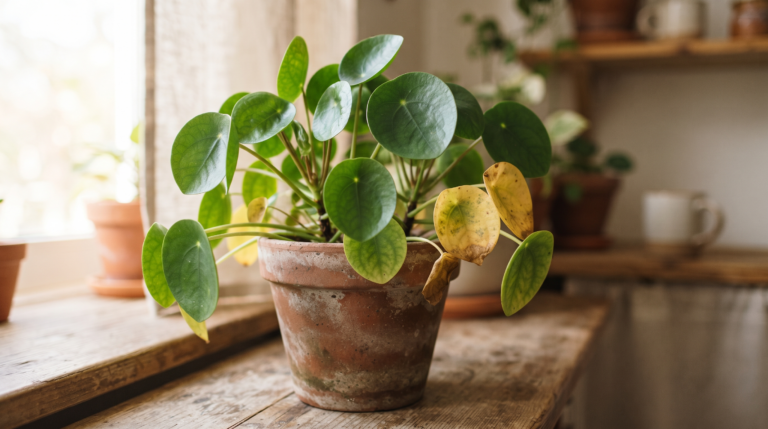
The real damage happens below the surface. The adults are just annoying, but their larvae live in the top inch of soil and feed on organic matter and, occasionally, tender roots. If you have seedlings or a plant that suddenly looks unhappy, check out yellow leaves on plants to rule out other issues too.
What's Actually Causing Them
Fungus gnats don't appear out of nowhere. They're a symptom of one thing above all: soil that stays too wet.
The main causes
- Overwatering. Consistently damp topsoil is a nursery for gnat larvae. This is by far the most common reason.
- Poor drainage. Pots without drainage holes or dense, water-holding soil keep the surface soggy.
- Contaminated potting mix. Some bags of soil arrive already carrying eggs or larvae.
- New plants from the store. Gnats hitchhike in on freshly purchased plants.
If you're not sure how much water your plants actually need, my guide on how to water houseplants walks through the finger-test and other simple methods to stop overwatering for good.
Step-by-Step: Getting Rid of Them
Attack the problem from two angles at once—the adults flying around and the larvae in the soil.
Step 1: Let the soil dry out
Gnat larvae can't survive in dry soil. Let the top 1–2 inches dry out completely between waterings. For many plants this alone breaks the cycle within a couple of weeks.
Step 2: Trap the adults
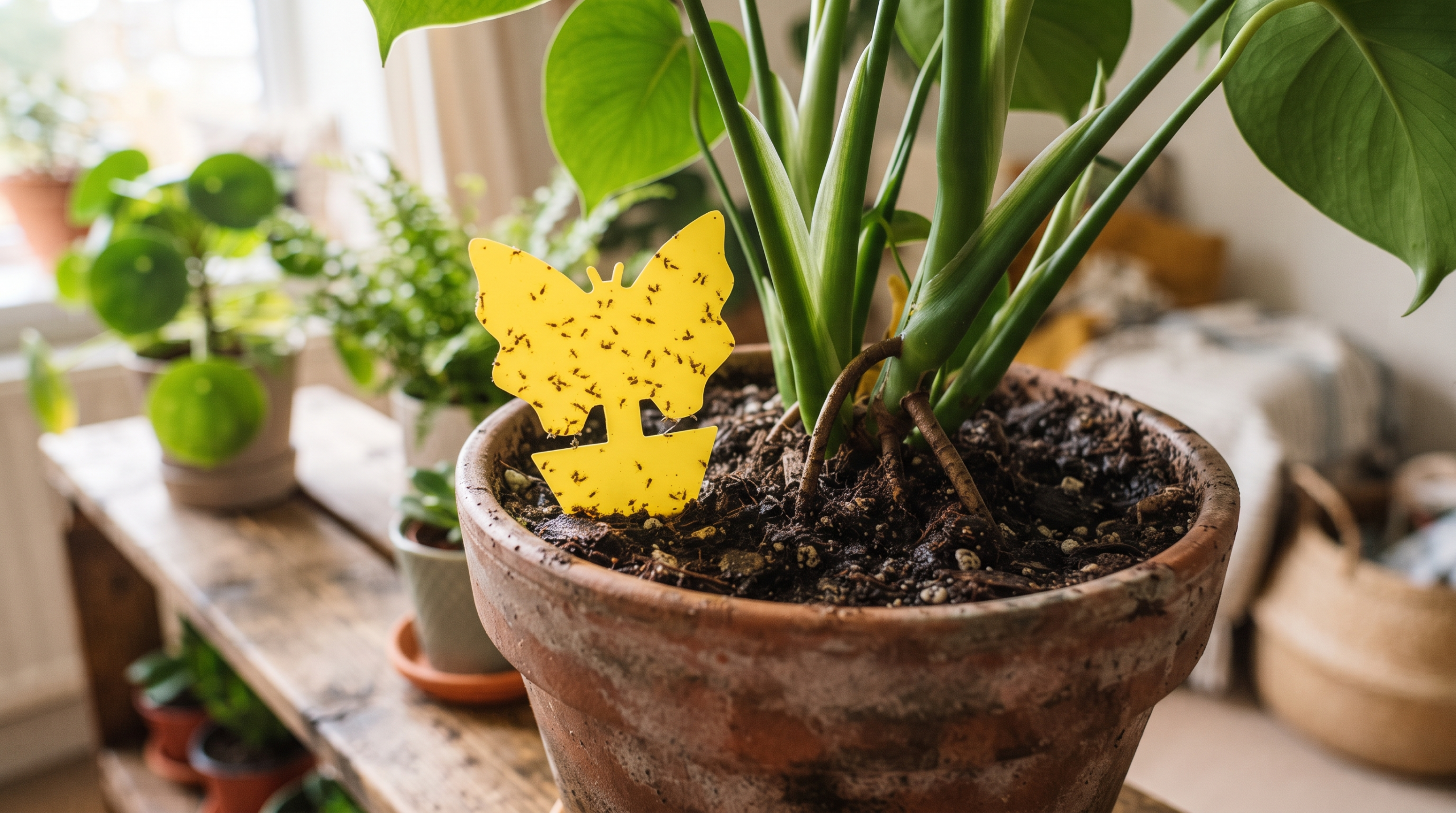
- Place yellow sticky traps flat or upright near the soil surface. Adults are drawn to yellow and get stuck.
- Set out a shallow apple cider vinegar trap (a little vinegar plus a drop of dish soap) to catch stragglers.
Step 3: Treat the larvae
- Bottom-water your plants for a few weeks so the top layer stays dry and inhospitable.
- Water with a BTi solution (a naturally occurring bacteria sold as mosquito bits/dunks) which targets larvae without harming your plant.
- A light layer of sand or fine gravel on top of the soil blocks adults from laying eggs.
Step 4: Repot if it's severe
If the infestation is stubborn, remove the top inch or two of soil and replace it with fresh, dry mix. For a badly affected plant, repot completely into clean, well-draining soil.
Preventing Them From Coming Back
Once you've cleared them out, a few habits keep them gone for good:
- Water less often. Wait until the top of the soil is dry. Tough, drought-tolerant plants like a snake plant rarely get gnats because they like to dry out.
- Use pots with drainage holes and a well-draining potting mix.
- Quarantine new plants for a week or two before adding them to your collection.
- Empty saucers so pots never sit in standing water.
- Store potting soil sealed and dry between uses.
If you're caring for thirstier plants like a peace lily, learn its real signals instead of watering on a schedule—my post on why is my peace lily drooping can help you tell true thirst from overwatering.
Tips
- Water from the bottom for a few weeks so the top layer of soil stays dry and larvae can't thrive.
- Yellow sticky traps let you monitor progress—fewer stuck gnats each week means you're winning.
- A half-inch of sand on top of the soil is a cheap, invisible barrier against egg-laying adults.
- BTi (mosquito bits) is safe for pets, kids, and plants but deadly to gnat larvae.
- When in doubt, wait an extra day or two before watering—most houseplants prefer it.
Common Problems
The gnats seem to disappear, then come right back a week later.
You likely killed the adults but not the larvae. Keep the top soil dry, add BTi to your watering, and use sticky traps for at least 3–4 weeks to break the full life cycle.
I let the soil dry out but the gnats are still there.
Check that water isn't collecting in the saucer or that a dense soil isn't holding moisture below the surface. Consider repotting into a lighter, well-draining mix.
I keep getting gnats on plants that need constant moisture.
Switch to bottom-watering and top the soil with sand or grit. If a plant truly can't dry out, sticky traps plus BTi keep the population under control long term.
New plants bring gnats into my home every time.
Quarantine new plants away from the rest for 1–2 weeks, let their soil dry out, and add a sticky trap so you catch any hitchhikers before they spread. A hardy pothos is easy to keep gnat-free once established.
Varieties to Try
- Overwatered pothos (a very common gnat magnet)
- Peace lilies kept constantly moist
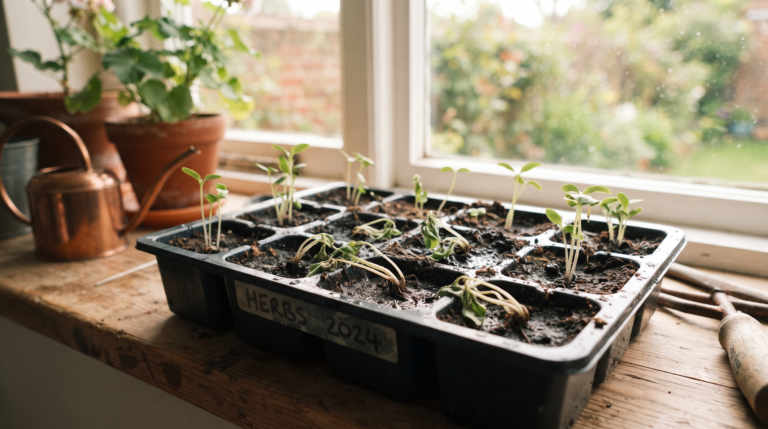
- Seed-starting trays and young seedlings
- Ferns and other humidity-loving plants
- Any plant in a pot without drainage holes
- Freshly repotted plants in fresh, moist potting mix