How to Grow Basil Indoors Year-Round
If you've ever bought a grocery-store basil plant only to watch it collapse within a week, you're not alone—and it's not your fault. Basil is genuinely easy to grow indoors once you understand what it actually wants: warmth, light, and a steady drink of water. Let's get you a lush, fragrant plant you can pinch from all year long.
Quick Facts
| Light | 6+ hours bright direct light, or a grow light |
| Water | Keep soil evenly moist, not soggy |
| Soil | Light, well-draining potting mix |
| Difficulty | Easy to moderate |
| Time to Maturity | 3–4 weeks for first pinch; 6–8 weeks from seed to steady harvests |
| USDA Zone | Any zone indoors; outdoors thrives in zones 4–11 in the warm season |
Start Here: What Basil Really Needs
Most indoor basil failures come down to two things—not enough light and inconsistent watering. Fix those and you're most of the way there.
Light
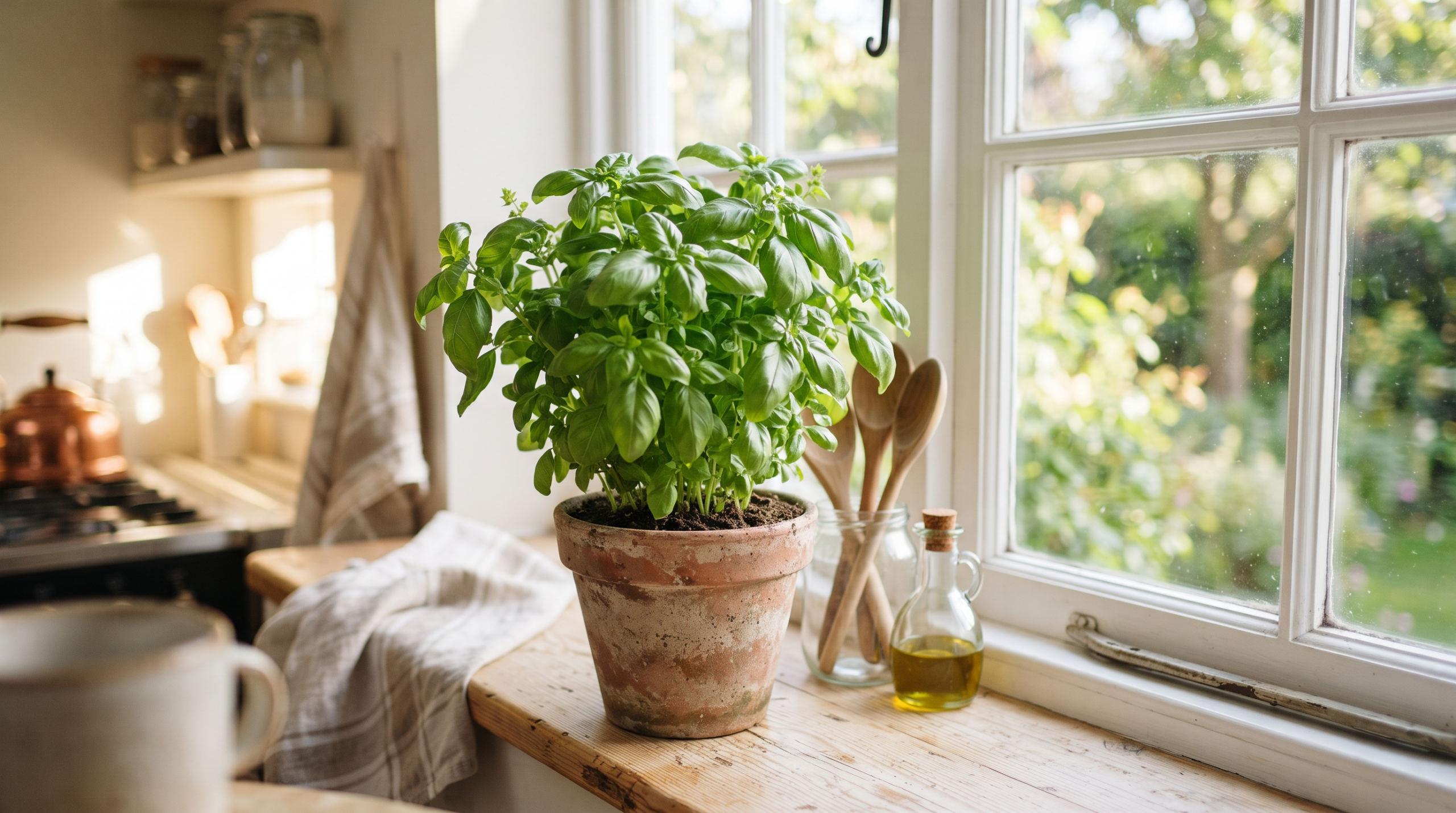
Basil is a sun-lover. It wants at least 6 hours of bright, direct light on a sunny south- or west-facing windowsill. If your home is dim, don't force it—a simple LED grow light run 12–14 hours a day works beautifully and lets you grow year-round regardless of your USDA zone. If you're new to windowsill edibles, check out our roundup of herbs you can grow on a windowsill.
Warmth
Basil is a tender warm-season herb that hates the cold. Keep it above 65°F and away from drafty windows and AC vents. If your leaves suddenly look sad and wilty near a cold pane, that's a temperature clue, not always a water one.
Container and drainage
- Use a pot at least 6 inches wide and deep for one plant; go bigger for a small cluster.
- A drainage hole is non-negotiable—basil roots rot fast in standing water.
- Fill with a light, well-draining potting mix (not heavy garden soil).
Common Problems (Read This Before You Panic)
Catching these early saves your plant.
- Leggy, stretched stems usually mean too little light. Move it closer to the window or add a grow light.
- Yellow lower leaves often signal overwatering or hungry soil—see our guide on yellow leaves on plants.
- Tiny flying bugs in the soil? Those are likely fungus gnats from soggy mix; here's how to get rid of fungus gnats.
- White powdery coating on leaves is a fungal issue—learn to identify and treat powdery mildew.
Planting: Seeds or a Starter Plant
You can grow basil two ways.
From seed
Basil sprouts fast and easily. Sow seeds about ¼ inch deep in moist mix, keep them warm (70–75°F speeds things up), and expect sprouts in 5–10 days. Growing indoors means you're not tied to your last frost date, but if you also plan an outdoor batch, start seeds 4–6 weeks before your last frost. New to seed starting? See when to start seeds indoors.
From a starter plant
Those grocery-store pots are usually many seedlings crammed together. Gently divide them into 2–3 pots so each has room to breathe—this alone can save a struggling plant.
Feeding
Basil grows fast and appreciates light feeding. Use a diluted balanced liquid fertilizer every 2–3 weeks during active growth. Don't overdo it—too much nitrogen makes lush leaves with weaker flavor.
Watering and Ongoing Care
Basil likes its soil evenly moist but never waterlogged.
- Water when the top inch of soil feels dry to the touch.
- Water thoroughly until it drains from the bottom, then empty the saucer.
- Indoor plants dry out faster near heat vents, so check every couple of days.
If you tend to over- or under-love your plants, our how to water houseplants guide covers the finger-test in detail. The rhythm matters more than the calendar—warmth and light will speed up how fast it drinks.
Harvesting for a Bushier Plant
Here's the secret: harvesting IS pruning. The more you pinch, the bushier and more productive your basil gets.
How to harvest
- Once your plant has a few sets of leaves (around 6–8 inches tall), start pinching.
- Snip just above a pair of leaves, not from the bottom. This tells the plant to branch into two new stems.
- Take from the top and outer growth regularly rather than stripping the base.
Pinch the flowers
When you see flower buds forming, pinch them off. Once basil flowers (bolts), it puts energy into seeds and the leaves turn bitter. Regular pinching keeps it in leaf-producing mode.
With steady picking, expect your first small harvest 3–4 weeks after planting a starter and ongoing harvests from about 6–8 weeks from seed.
Tips
- Pinch often—even when you don't need the leaves—to force bushy growth.
- Rotate the pot a quarter turn every few days so it grows evenly toward the light.
- Grouping a few pots together raises humidity and keeps plants happier in dry indoor air.
- Use scissors or clean fingers to snip above a leaf pair, never rip stems.
- If flavor fades, ease up on fertilizer and make sure it's getting enough light.
Common Problems
Plant is tall, thin, and floppy with big gaps between leaves
It's stretching for light. Move to your brightest window or add a grow light 12–14 hours a day, and pinch the tops to encourage branching.
Leaves wilt even though the soil is wet
This is usually overwatering or a pot with no drainage causing root rot. Ensure a drainage hole, let the top inch dry between waterings, and repot into fresh light mix if needed.
Plant suddenly starts flowering
It's bolting. Pinch off flower buds as soon as they appear and harvest more aggressively from the top to redirect energy into leaves.
Leaves have brown or black spots and look mushy
Often from cold air or splashing water on foliage. Move away from drafty windows, water at the soil line, and improve airflow around the plant.
Varieties to Try
- Genovese – the classic large-leaf pesto basil
- Sweet Basil – all-purpose and beginner-friendly
- Dwarf/Greek basil – compact, perfect for small pots
- Thai basil – anise-scented, great for stir-fries
- Lemon basil – bright citrusy leaves
- Purple/Dark Opal basil – striking color for garnish