How to Plan Your First Vegetable Garden
Starting your first vegetable garden is one of the most rewarding things you can do, and I promise it's simpler than it looks. The secret isn't a green thumb, it's a little planning up front. Let's map out a garden that fits your space, your sunlight, and your local climate so you can grow food you'll actually enjoy eating.
Quick Facts
| Light | Most veggies need 6–8 hours of direct sun |
| Water | About 1 inch per week, more in heat |
| Soil | Loose, well-draining soil rich in compost |
| Difficulty | Beginner-friendly with good planning |
| Time to Maturity | Varies: 30 days (lettuce) to 80+ days (tomatoes) |
| USDA Zone | Adaptable to all zones; timing depends on your zone |
Step 1: Find Your Zone and Last Frost Date
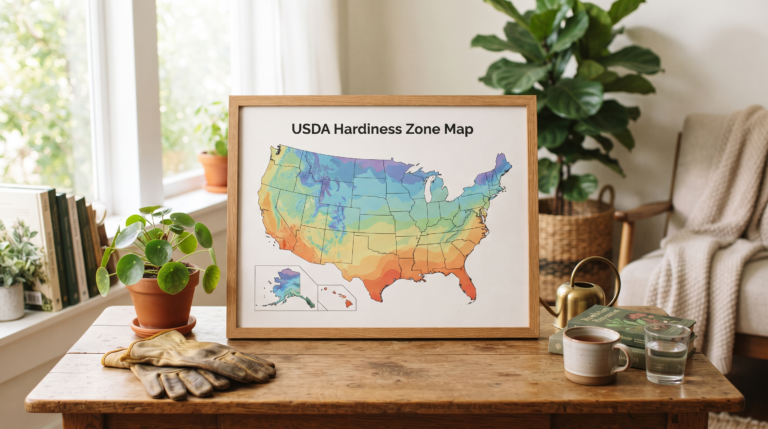
Before you buy a single seed, you need two numbers: your USDA hardiness zone and your average last frost date in spring. These tell you *when* it's safe to plant and *what* will thrive where you live.
- Your USDA zone reflects your area's average low temperatures. Not sure what yours is? Read USDA Hardiness Zones Explained to look it up in about two minutes.
- Your last frost date is the point in spring after which frost is unlikely. Most warm-season crops go in the ground 1–2 weeks after this date.
Instead of fixed calendar dates, we'll always say things like "2–4 weeks before your last frost." That keeps your plan accurate whether you garden in Georgia or Minnesota.
Step 2: Pick the Right Spot
Sunlight is the single biggest factor in vegetable success. Spend a day watching your yard, balcony, or patio and note where the sun falls.
What to look for
- Full sun (6–8+ hours): Best for tomatoes, peppers, squash, and beans.
- Partial sun (3–6 hours): Good for leafy greens and herbs.
- Water access: Choose a spot you can reach easily with a hose or watering can.
- Level ground: Avoid low areas where water pools after rain.
No yard? No problem. Containers on a sunny porch work beautifully for many crops, like tomatoes in pots or lettuce in containers.
Step 3: Choose Beginner-Friendly Crops
Start small and grow what you love to eat. A tidy 4×4-foot bed or a handful of containers is plenty for year one.
Easy wins for first-timers
- Leafy greens: Lettuce and spinach grow fast and forgive mistakes.
- Herbs: Basil, mint, and green onions are nearly foolproof. Try growing basil indoors or regrowing green onions from kitchen scraps.
- Tomatoes and peppers: Rewarding and productive, though they need warmth and full sun.
- Radishes and bush beans: Quick and satisfying for impatient gardeners.
Resist the urge to plant one of everything. Five crops you'll actually use beats twenty you won't.
Step 4: Map Your Timing
This is where your zone really matters. Some crops love cool weather; others need heat to thrive.
Cool-season crops (tolerate light frost)
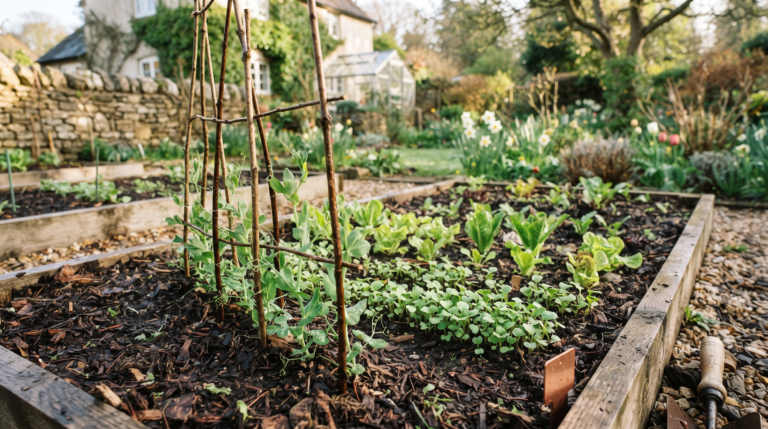
Lettuce, spinach, peas, radishes, and kale can go out 2–4 weeks before your last frost. See what to plant in early spring for a full list.
Warm-season crops (frost-sensitive)
Tomatoes, peppers, squash, and beans need warm soil. Wait until 1–2 weeks *after* your last frost.
Starting seeds indoors
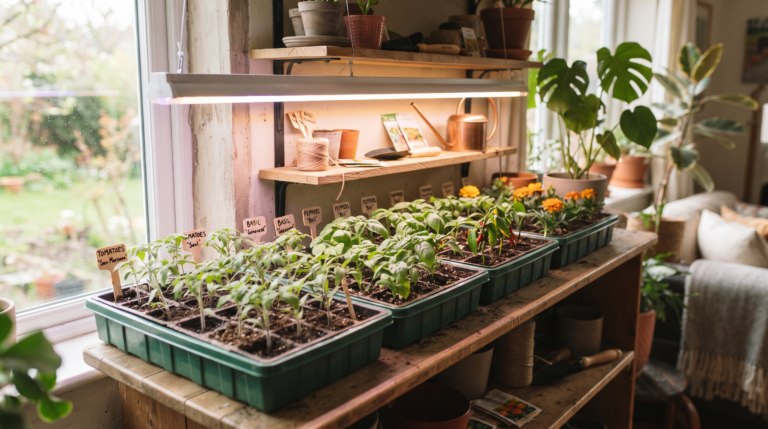
Slow growers like tomatoes and peppers benefit from a head start indoors 6–8 weeks before your last frost. Learn the how and when in when to start seeds indoors.
Step 5: Prep Soil and Plant
Healthy soil is the foundation of a healthy garden. You don't need to be a chemist, just generous with compost.
- Loosen the soil 8–12 inches deep so roots can spread.
- Mix in compost to feed plants and improve drainage.
- Respect spacing on the seed packet. Crowded plants compete for light and air, inviting disease.
- Water in your seeds and transplants gently right after planting.
After that, most veggies want about 1 inch of water per week. Water deeply at the base in the morning rather than a little every day.
Tips
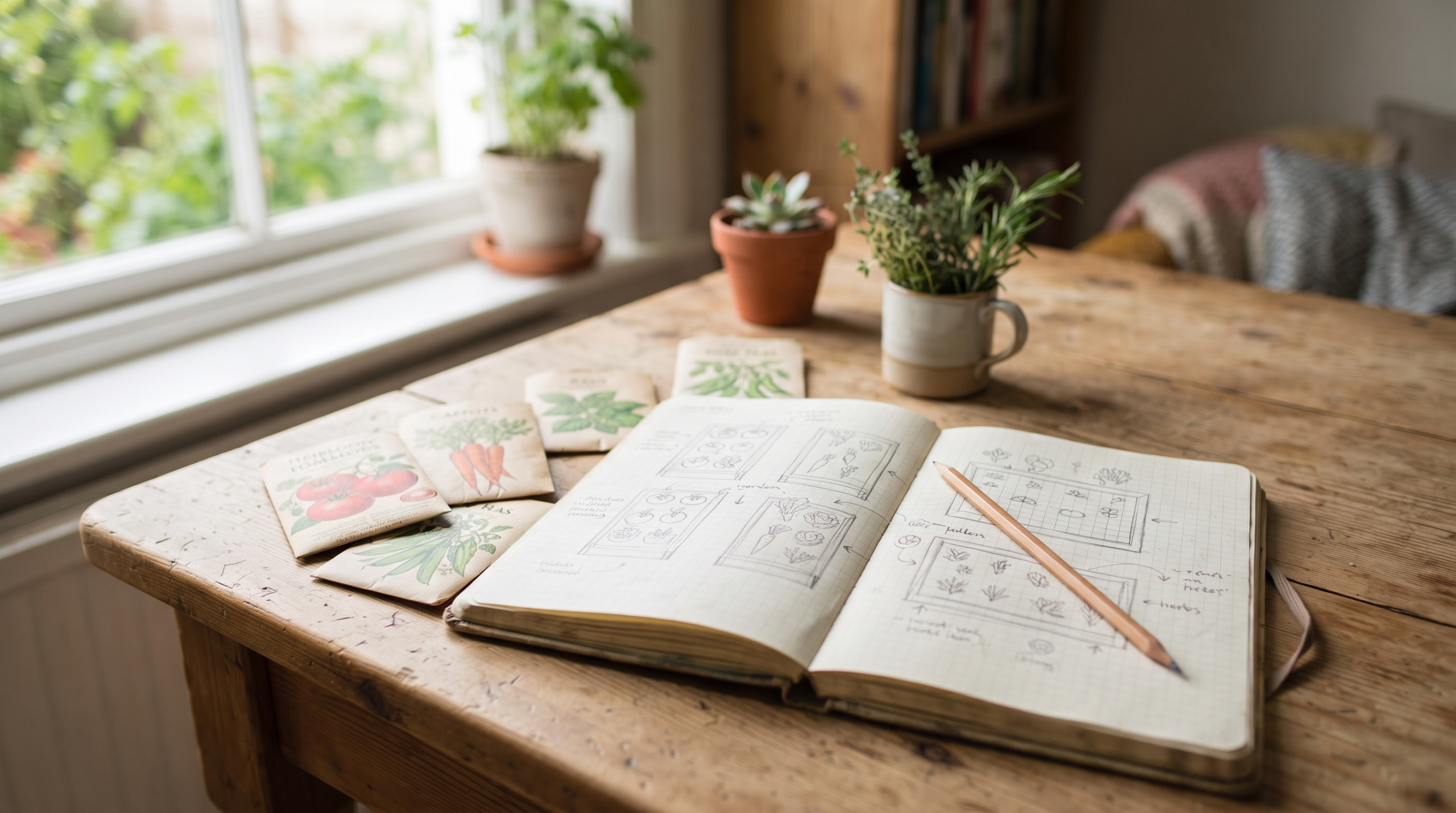
- Keep a simple garden journal—note planting dates, weather, and what worked for next year.
- Mulch around plants to hold moisture and block weeds.
- Group plants with similar water and sun needs together.
- Start with 3–5 crops your family actually eats.
- Label everything; seedlings look surprisingly alike.
- Check plants a few minutes each morning to catch problems early.
Common Problems
Seedlings flop over and collapse at the base
This is often damping-off from overwatering or poor airflow. Let the surface dry between waterings and give seedlings gentle air circulation. See why are my seedlings falling over.
Leaves turning yellow
Usually overwatering, poor drainage, or a nutrient gap. Check that soil drains well and ease off watering. More help in yellow leaves on plants.
Tiny bugs clustering on new growth
Aphids love tender shoots. Blast them off with water or use insecticidal soap—full steps in how to get rid of aphids naturally.
White powdery coating on leaves
That's powdery mildew, common in crowded, humid spots. Improve airflow and spacing. Learn to treat it in powdery mildew: identify and treat.
Varieties to Try
- 'Buttercrunch' lettuce — fast, tender, and heat-tolerant
- 'Cherry' tomatoes — prolific and forgiving for beginners
- 'California Wonder' bell peppers — reliable in warm weather
- 'Sugar Snap' peas — sweet cool-season climber
- 'Cherry Belle' radishes — ready in about 25 days
- 'Genovese' basil — classic aromatic herb for containers