When to Start Seeds Indoors (by USDA Zone)
If you've ever stared at a packet of seeds wondering whether it's too early, too late, or just plain wrong to start them, you're in good company. Timing is the single most common thing new gardeners worry about, and the good news is that it's completely learnable. Once you know your USDA zone and your last frost date, the whole seed-starting calendar clicks into place.
Quick Facts
| Light | Bright light or grow lights 14–16 hrs/day for seedlings |
| Water | Consistently moist, never soggy |
| Soil | Light, sterile seed-starting mix |
| Difficulty | Beginner-friendly with a little planning |
| Time to Maturity | Varies by crop; seedlings are usually ready to transplant in 4–8 weeks |
| USDA Zone | All zones (3–11) — your zone sets your timing |
Start With Your Zone and Last Frost Date
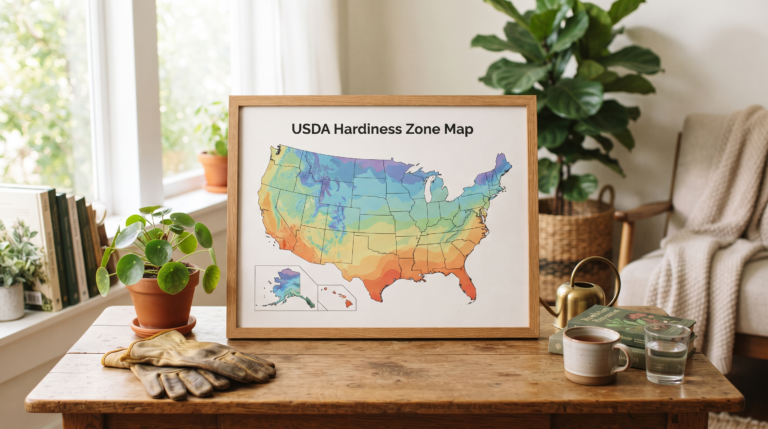
Before you plant a single seed, you need two numbers: your USDA hardiness zone and your average last frost date. These two together tell you when it's safe to move tender plants outdoors, and you count backward from there.
- Your zone (a rough guide from 3 to 11) reflects how cold your winters get.
- Your last frost date is the average date after which frost is unlikely in spring.
If you're not sure of your zone, start with USDA Hardiness Zones Explained. A quick search of your ZIP code will also give you a local last-frost estimate. Remember these are *averages*, not guarantees — always watch your local forecast before transplanting.
The Count-Backward Method
Seed packets almost always tell you when to start seeds relative to your last frost, like *"start indoors 6–8 weeks before last frost."* That's your cue to count backward from your frost date.
A simple example
- Say your last frost is in mid-May.
- Tomatoes want a 6–8 week head start.
- Counting back, you'd sow them mid-to-late March.
Rough timing by crop type
- Peppers and eggplant: 8–10 weeks before last frost (slow starters)
- Tomatoes: 6–8 weeks before last frost
- Broccoli, cabbage, lettuce: 4–6 weeks before last frost
- Cucumbers, squash, melons: 2–4 weeks before last frost (they hate being transplanted early)
Cooler zones (3–5) will land later in spring; warmer zones (8–11) can start earlier. When you're ready to map out the whole bed, how to plan your first vegetable garden walks you through spacing and layout.
What You Need to Start Seeds Well
You don't need fancy equipment, but a few basics make a huge difference:
- Sterile seed-starting mix (not garden soil, which packs down and carries disease)
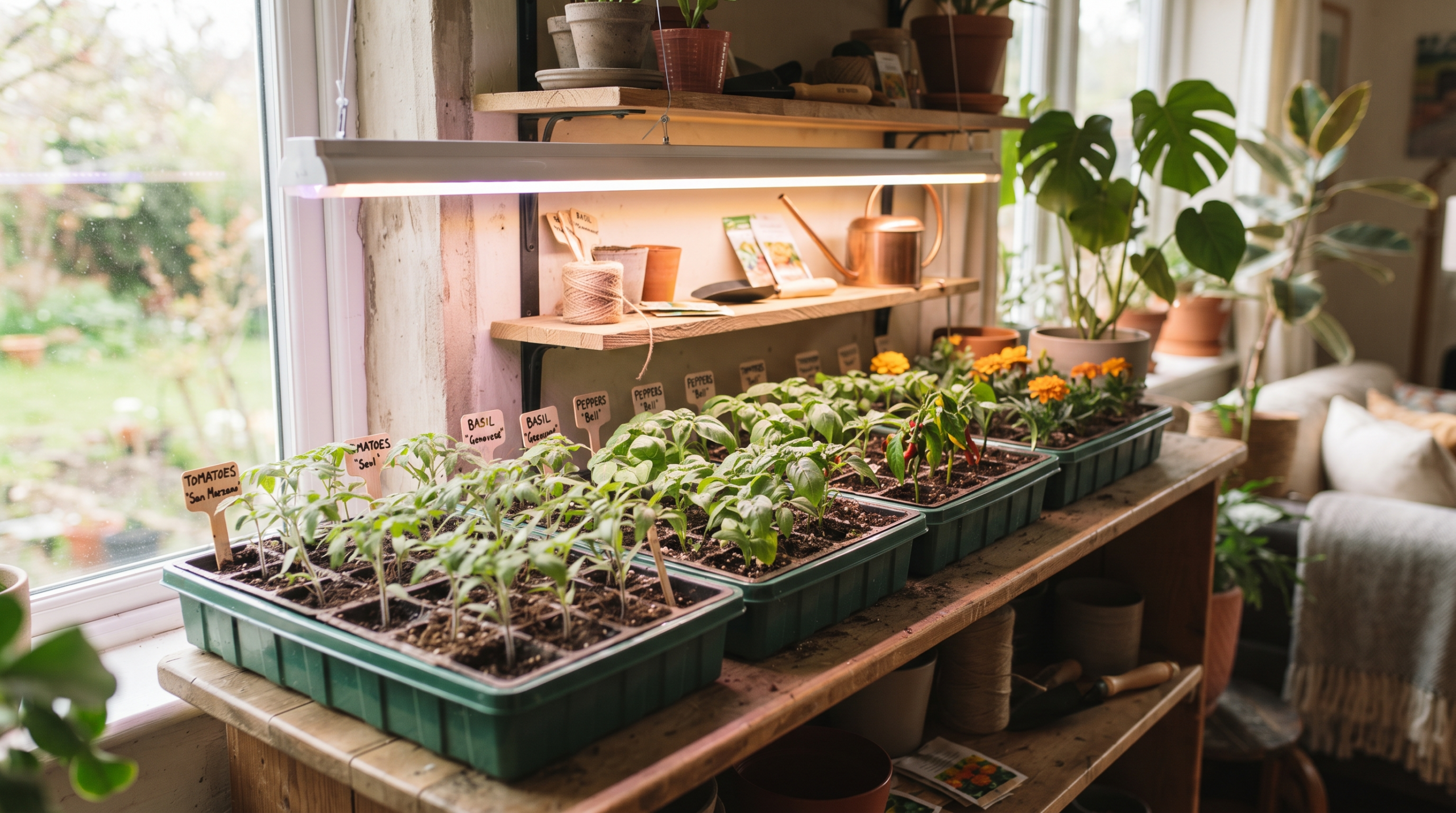
- Containers with drainage — cell trays, small pots, or even yogurt cups with holes
- A bright light source — a sunny south window can work, but grow lights give sturdier seedlings
- Gentle bottom warmth for heat-lovers like peppers and tomatoes
Give seedlings 14–16 hours of light per day and keep the mix evenly moist. Leggy, pale seedlings are almost always a sign of too little light. If you're just testing the waters, easy windowsill crops like basil indoors are a forgiving place to build confidence.
Hardening Off Before Transplanting
Seedlings raised indoors are tender and need to adjust to real sun and wind gradually — a process called hardening off.
- About 7–10 days before transplanting, set seedlings outside in a sheltered, shady spot for an hour or two.
- Add a little more time and sun each day.
- Bring them in if a cold night or frost threatens.
Only transplant tender crops after your last frost date has safely passed and nighttime temperatures stay reliably above freezing. Skipping this step is one of the fastest ways to lose weeks of hard work overnight.
Tips
- Label everything as you sow — seedlings look nearly identical and memory fails fast.
- Write your last frost date on the calendar, then count backward for each crop.
- Run a small fan near indoor seedlings to build strong stems and reduce disease.
- Don't start heat-loving crops too early; overgrown, root-bound seedlings struggle after transplant.
- Keep the seed packet — the back holds your best zone-neutral timing instructions.
Common Problems
Seedlings are tall, thin, and flopping over.
This is 'leggy' growth from too little light. Move seedlings under a grow light or much brighter window and keep the light close. See why are my seedlings falling over for more.
Started seeds way too early and now they're huge indoors.
Pot them up into larger containers to buy time, keep them well-lit, and hold off until your frost date passes. Next year, count backward from your last frost instead of starting on impulse.
Tiny flying bugs around the soil surface.
Those are fungus gnats, usually from overwatering. Let the top of the mix dry between waterings; see how to get rid of fungus gnats.
Seeds never sprouted at all.
Check that the mix stayed warm and moist, and confirm the seeds weren't sown too deep. Old or improperly stored seed can also fail — try a fresh packet.
Varieties to Try
- Tomatoes — a classic 6–8 week head start crop
- Peppers — slow, start 8–10 weeks early
- Broccoli and cabbage — cool-season, transplant early
- Lettuce — quick and forgiving for beginners
- Cucumbers and squash — start late, transplant gently
- Herbs like basil — easy indoor starters