How to Grow Mint Without It Taking Over
The first summer I grew mint, I made the classic rookie mistake: I tucked one tiny plant into my garden bed and figured it would stay put. By the next season, it had marched halfway across the yard like it owned the place! The good news is that mint is one of the easiest, most rewarding herbs you can grow—as long as you keep it politely contained in a pot.
Quick Facts
| Light | 4–6 hours of sun; tolerates part shade |
| Water | Keep soil consistently moist, not soggy |
| Soil | Rich, well-draining potting mix |
| Difficulty | Very easy—almost too easy |
| Time to Maturity | 60–90 days from seed; 2–3 weeks from a starter plant |
| USDA Zone | Perennial in zones 3–11, depending on variety |
Why Mint Needs a Pot (and What You'll Need)
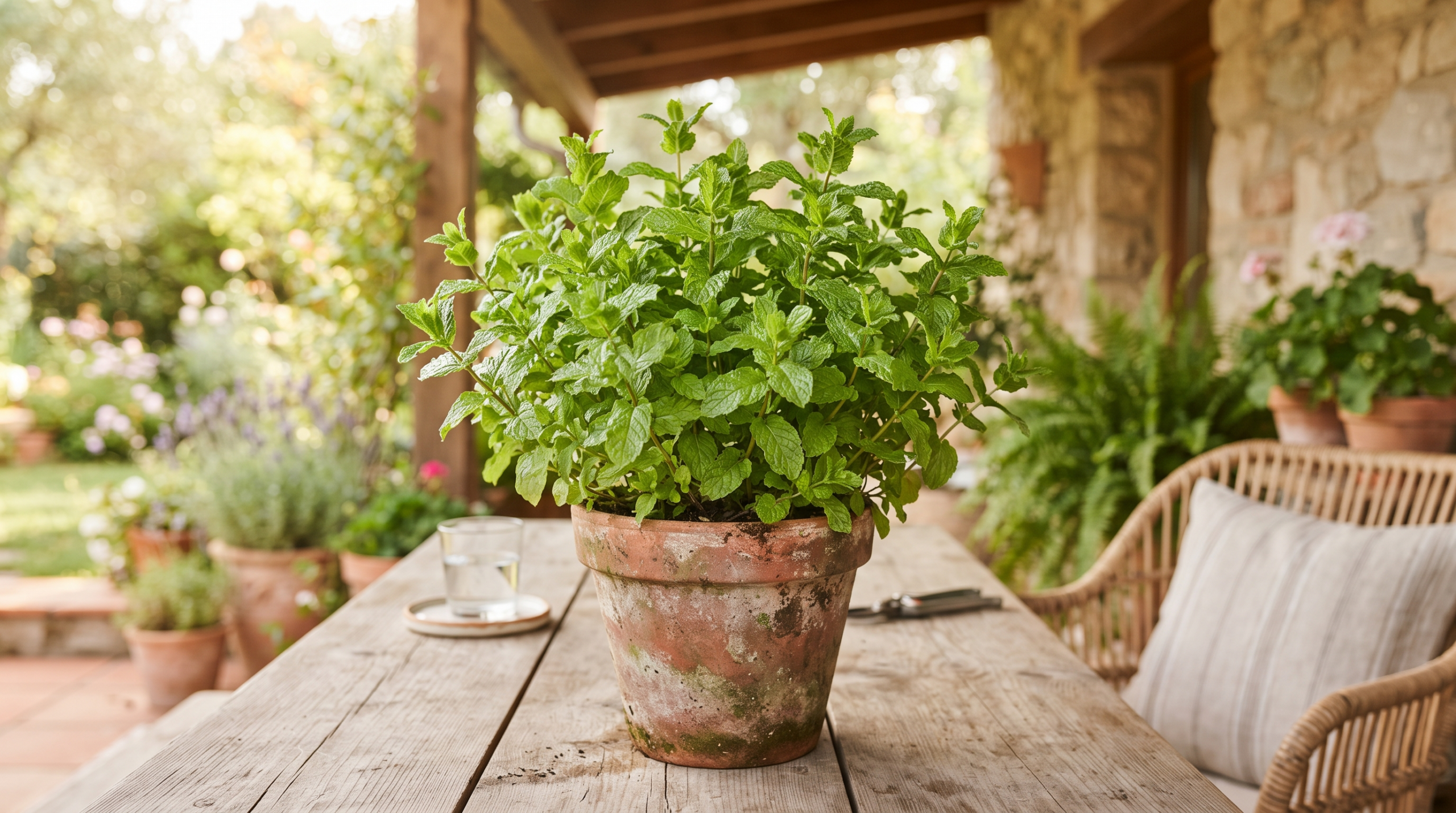
Mint spreads through underground runners called rhizomes, which is exactly why it takes over garden beds. The simplest fix? Always grow mint in a container. A pot naturally corrals those wandering roots.
Here's what to gather before you start:
- A container at least 8–12 inches wide and deep with drainage holes
- Quality potting mix (not garden soil, which compacts in pots)
- One healthy starter plant from a nursery, or a cutting from a friend
- A sunny-ish windowsill, balcony, or patio spot
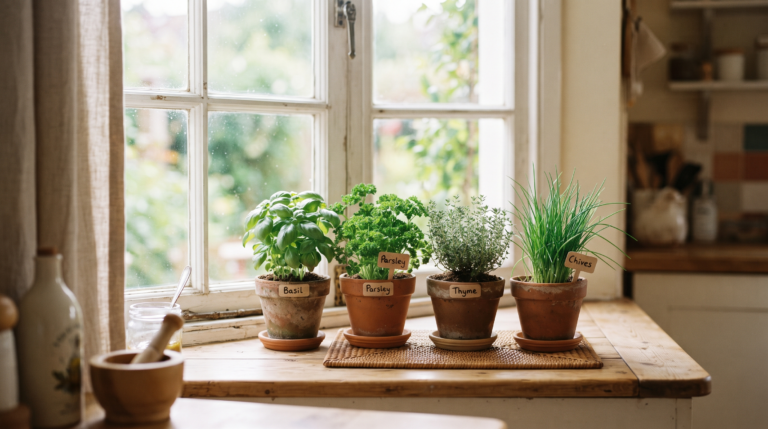
If you love the idea of a windowsill herb collection, mint fits right in alongside the picks in our windowsill herbs guide.
Planting and Placement
If you're starting from a nursery plant, you can pot it up any time during the growing season. Starting from seed? Sow indoors 8–10 weeks before your last frost, then move plants outside once nights stay reliably above freezing. Not sure when that is? Look up your zone in our USDA hardiness zones explained guide.
Light
Mint is forgiving. It thrives in 4–6 hours of sun but happily tolerates part shade—perfect for a spot that doesn't bake all afternoon.
The 'pot within a pot' trick
Even inside a container, mint can leap into neighboring pots if their rims touch soil. Keep your mint pot slightly isolated, or set it on a saucer or paver so runners can't sneak out the drainage holes and root in the ground below.
Watering and Feeding
Mint likes to stay consistently moist—it's thirstier than many herbs. Check the top inch of soil with your finger; when it feels dry, water until it drains from the bottom.
- In hot weather, container mint may need water daily
- Don't let it sit in a saucer of standing water for hours—soggy roots invite rot
- Feed lightly with a diluted balanced fertilizer every 4–6 weeks during the growing season
Watering in pots is its own small skill. If you're new to it, our how to water houseplants guide covers the finger-test method that works for mint too.
Harvesting (and Keeping It Bushy)
You can start snipping once the plant is 6–8 inches tall, usually 2–3 weeks after transplanting a starter, or 60–90 days from seed.
How to harvest
- Pinch or snip just above a pair of leaves
- Always harvest from the top—this encourages branching and keeps the plant full instead of leggy
- Regular cutting actually *improves* your plant, so don't be shy
Prevent it from flowering
Once mint flowers, the leaves turn slightly bitter. Pinch off flower buds as soon as you spot them to keep the flavor sweet and the plant producing.
Overwintering and Dividing
In most zones (3–11, depending on variety), mint is a perennial that dies back in winter and returns in spring. In colder zones, move the pot to a sheltered spot or unheated garage once it goes dormant.
Every year or two, mint will fill its pot completely and start to sulk. When that happens:
- Slide the root ball out
- Slice it into sections with a clean knife
- Replant one section in fresh soil and share or compost the rest
This keeps your mint vigorous—and gives you free plants to give away.
Tips
- Never plant mint directly in a garden bed unless you want it everywhere.
- Grow different varieties in separate pots—they'll cross-flavor if crowded together.
- Harvest in the morning when the essential oils (and flavor) are strongest.
- Freeze chopped mint in ice cube trays with water for year-round use.
- Rotate the pot every few days so all sides get even light and grow evenly.
Common Problems
Leggy, sparse stems with big gaps between leaves
Too little light or not enough harvesting. Move to a brighter spot and pinch the tops back hard to force bushy new growth.
Wilting even though the soil seems damp
This often signals root rot from soggy soil. Check drainage holes are clear, empty the saucer, and let the top inch dry between waterings.
Powdery white coating on the leaves
That's powdery mildew, common in humid, crowded conditions. Improve airflow, avoid wetting the leaves, and see our powdery mildew guide to treat it.
Tiny clustered bugs on new growth
Aphids love tender mint tips. Rinse them off with water and try the methods in our get rid of aphids naturally guide.
Varieties to Try
- Spearmint—the classic all-purpose choice for cooking and tea
- Peppermint—stronger, cooler flavor, great for drinks
- Chocolate mint—hints of cocoa, fun for desserts
- Apple mint—soft, fuzzy leaves with a fruity note
- Mojito (Mentha × villosa)—the traditional cocktail mint
- Pineapple mint—variegated leaves and a tropical scent