7 Herbs You Can Grow on a Windowsill
Some of my happiest kitchen mornings start with snipping fresh basil for eggs while it's still snowing outside. A windowsill herb garden is the gateway drug of growing food—it's forgiving, fast, and endlessly useful. If you've never grown a single thing, this is the perfect place to start.
Quick Facts
| Light | 6+ hours of direct sun (a south- or west-facing window) |
| Water | When the top inch of soil feels dry |
| Soil | Light, well-draining potting mix (not garden soil) |
| Difficulty | Beginner-friendly |
| Time to Maturity | 3–8 weeks to first harvest, depending on the herb |
| USDA Zone | Any zone—indoors you control the climate ([find your USDA zone](/usda-hardiness-zones-explained/)) |
What You'll Need to Get Started
Growing herbs on a windowsill takes surprisingly little. Before you plant anything, gather these basics:
- Pots with drainage holes — 4–6 inches wide per herb is plenty for most. Herbs hate wet feet, and a hole in the bottom is non-negotiable.
- A saucer to catch runoff and protect your sill.
- Light, fresh potting mix — never scoop soil from the yard, which compacts and may carry pests.
- A sunny window — most herbs want 6+ hours of direct light. A south- or west-facing window is ideal.
- Seeds or small starter plants — starters give you a head start, seeds are cheaper and fun.
If your brightest window still feels dim, a small grow light for a few hours a day makes a huge difference.
The 7 Best Herbs for a Windowsill
These seven are the most reliable beginner picks. Each one thrives in a pot and rewards you fast.
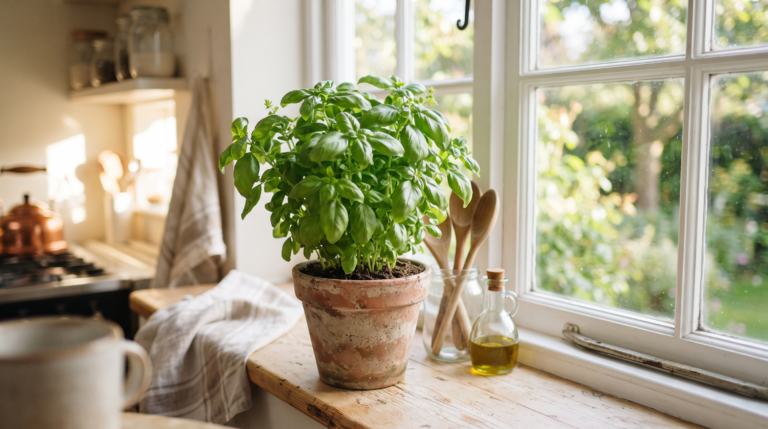
1. Basil
Warm, sun-loving, and quick. Start seeds indoors anytime you have a bright window, or grab a starter. See our full guide on how to grow basil indoors for the details. First harvest in about 3–4 weeks.
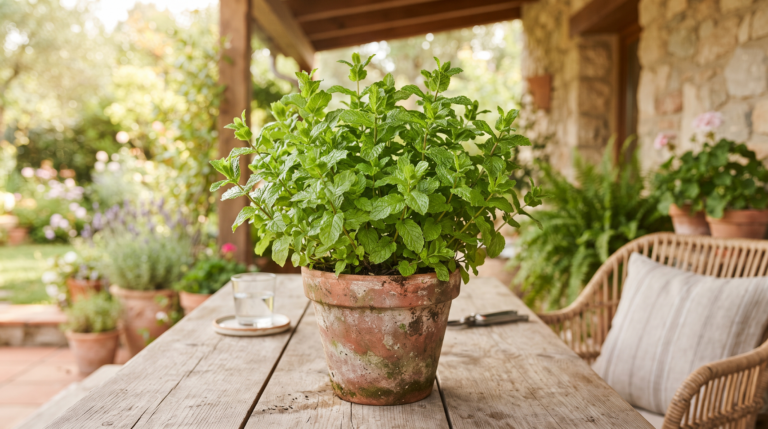
2. Mint
Wildly easy—almost *too* easy, since it spreads. Keeping it in a pot on your sill is actually the perfect way to contain it. Learn more in how to grow mint without it taking over.
3. Chives
Grassy, mild onion flavor. Snip the tops with scissors and they regrow again and again.
4. Parsley
Slow to germinate (be patient—up to 3 weeks), but a steady producer once established.
5. Thyme
A low, woody herb that loves bright light and dislikes overwatering. Very drought-tolerant.
6. Oregano
Another Mediterranean herb—sun and lean soil make it happy. Pinch often to keep it bushy.
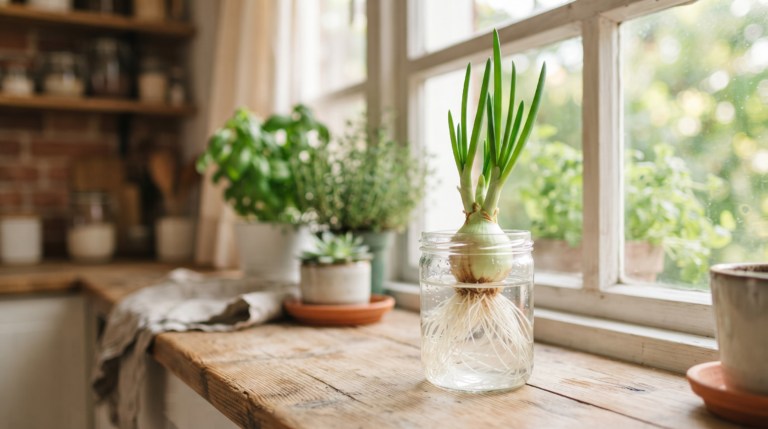
7. Green Onions
Technically a vegetable, but they belong here for how effortless they are. You can even regrow green onions from grocery-store scraps in a glass of water.
Light, Water, and Feeding
Light
Most culinary herbs are sun worshippers. Aim for 6+ hours of direct sunlight on a south- or west-facing sill. Rotate pots every few days so plants grow evenly instead of leaning toward the glass.
Water
Water when the top inch of soil feels dry to your finger, then water until it drains from the bottom. Empty the saucer so roots don't sit in water. Overwatering is the most common way beginners lose herbs—when in doubt, wait a day.
Feeding
Potting mix runs out of nutrients over time. Feed with a diluted liquid fertilizer (half strength) every 3–4 weeks during active growth. Go easy—overfed herbs grow fast but lose flavor.
Harvesting So Your Herbs Keep Coming Back
Harvesting is also pruning, and regular snipping actually makes plants bushier and more productive.
- Leafy herbs (basil, mint, oregano): Pinch just above a pair of leaves. This tells the plant to branch into two new stems.
- Chives and green onions: Cut the tops, leaving an inch or two, and they regrow.
- Woody herbs (thyme, oregano): Snip soft, green stems rather than old woody ones.
- The 1/3 rule: Never take more than about a third of the plant at once so it can recover.
With regular light harvesting, a healthy windowsill herb keeps producing for months—many for a full year or more indoors.
Tips
- Turn pots a quarter-turn every few days so plants don't lean toward the window.
- Group your pots together to create a little humidity pocket—herbs love the company.
- Snip often; frequent harvesting keeps plants bushy instead of leggy.
- Use scissors, not fingers, for a clean cut that heals faster.
- If growth slows and leaves pale, it's usually not enough light before it's a nutrient problem.
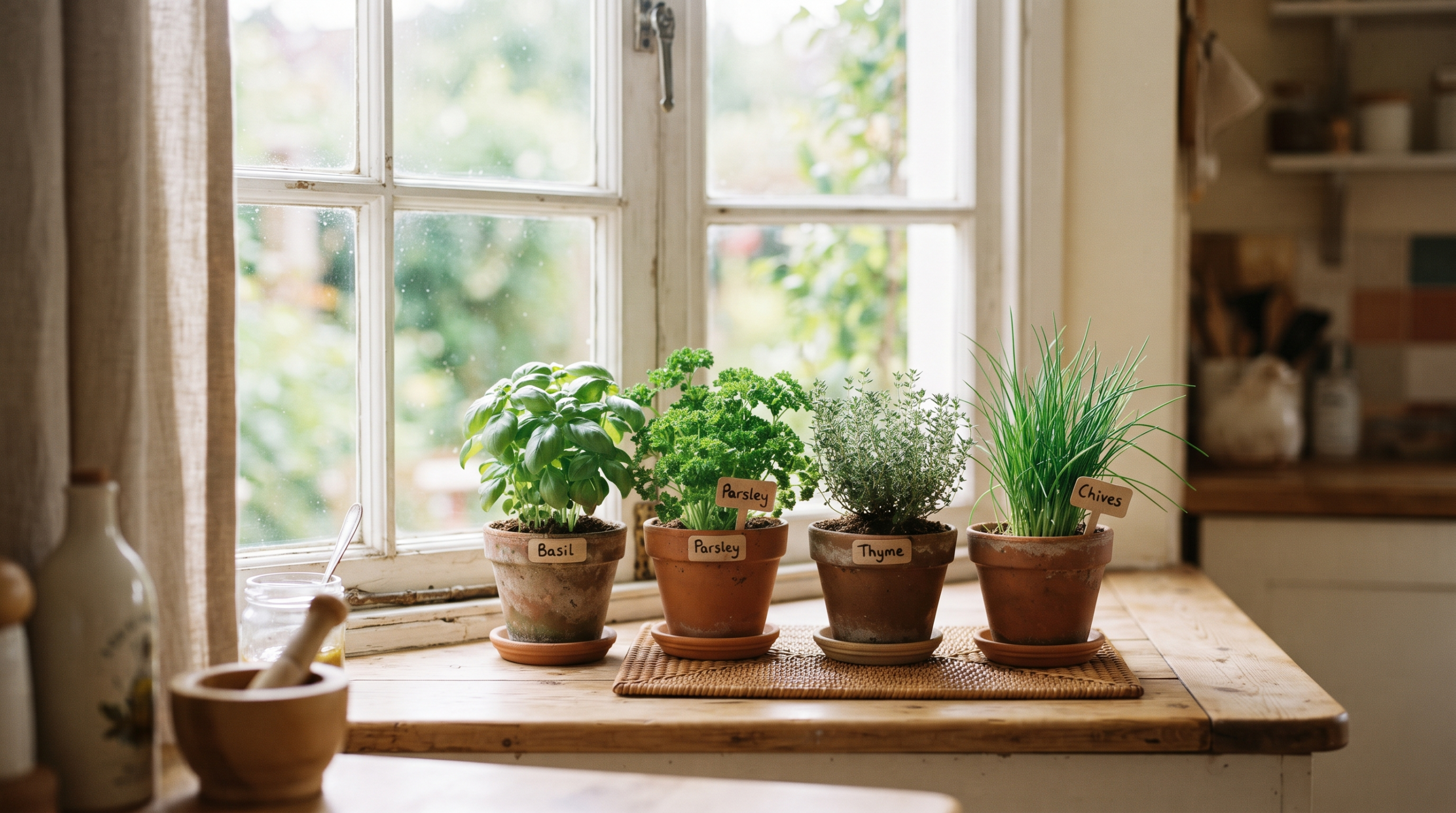
- Label your pots—young seedlings look surprisingly similar at first!
Common Problems
Leggy, stretched-out stems with wide gaps between leaves
This is a light problem. Move pots to your brightest window or add a few hours of grow light, and pinch back the tips to encourage bushier growth.
Yellowing leaves
Usually overwatering. Let the top inch of soil dry out between waterings and make sure the pot drains freely. Our guide on yellow leaves on plants walks through other causes.
Tiny flies hovering around the soil
Those are fungus gnats, drawn to constantly damp soil. Let the surface dry between waterings and see how to get rid of fungus gnats.
White powdery coating on leaves
That's powdery mildew, common with poor airflow. Space pots out, improve air circulation, and check powdery mildew: identify and treat.
Varieties to Try
- Genovese basil — the classic sweet variety for pesto
- Spearmint — the friendliest, most versatile mint
- Common (garden) thyme — reliable and richly flavored
- Greek oregano — the punchy pizza-herb type
- Flat-leaf (Italian) parsley — bolder flavor than curly
- Garlic chives — a mild, garlicky twist on regular chives