How to Grow Tomatoes in Pots
There's nothing quite like plucking a warm, sun-ripened tomato from a plant you grew yourself—right on your patio, balcony, or back step. The good news? You don't need a big garden to make it happen. With the right pot and a sunny spot, tomatoes are one of the most rewarding edibles a beginner can grow.
Quick Facts
| Light | 6–8+ hours of direct sun daily |
| Water | Consistent moisture; often daily in summer heat |
| Soil | Loose, well-draining potting mix (not garden soil) |
| Difficulty | Easy to moderate |
| Time to Maturity | 60–85 days from transplant, depending on variety |
| USDA Zone | Grown as a warm-season annual in most zones; check yours |
Choose the Right Pot and Soil
Tomatoes have big appetites and even bigger root systems, so container size matters more than almost anything else.
Pot size
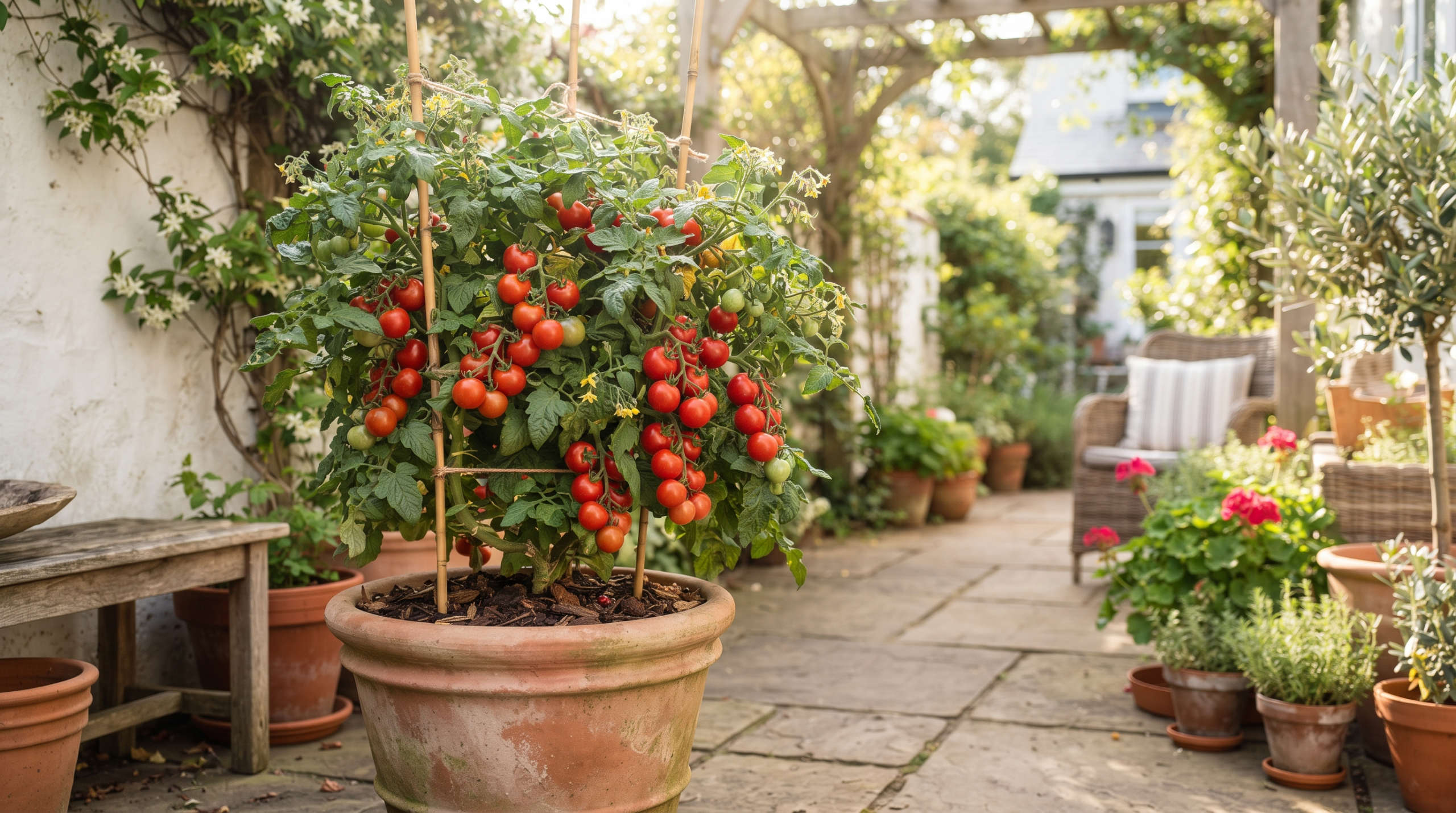
- Bush (determinate) types: at least a 5-gallon container
- Vining (indeterminate) types: 10–20 gallons for best results
- One tomato plant per pot—don't crowd them
Drainage
Your pot must have drainage holes. Tomatoes hate sitting in soggy soil, which leads to root rot. If your only pot lacks holes, drill a few.
Soil
Skip heavy garden soil, which compacts and drains poorly in containers. Use a quality potting mix, ideally one blended for vegetables. Mixing in a few handfuls of compost gives your plants a nutrient boost right from the start.
Planting and Placement
Tomatoes are warm-season plants that hate cold. Wait to move them outside until 2–4 weeks after your last spring frost, once nighttime temperatures stay reliably above 50°F. Not sure when that is? Look up your USDA hardiness zone to estimate your frost timing.
Sun
Give your pot the sunniest spot you have—6 to 8 hours of direct sun is the sweet spot. A south-facing balcony or patio is ideal.
Plant deep
Here's a tomato trick: bury the stem deeper than it was in its nursery pot, up to the first set of leaves. Tomatoes grow roots along buried stems, giving you a stronger, sturdier plant.
Support early
Add a cage or stake at planting time. Waiting until the plant is big risks damaging the roots later.
Watering and Feeding
Container tomatoes dry out fast, especially in summer. Inconsistent watering is the number-one cause of cracked fruit and blossom end rot.
Watering
- Check daily in hot weather; pots may need water once or even twice a day
- Water deeply until it runs out the drainage holes
- Aim for the soil, not the leaves, to reduce disease
- Mulching the top of the pot helps hold moisture
If you're still getting the hang of moisture levels, our guide on how to water houseplants explains the "check before you pour" habit that works for containers too.
Feeding
Potting mix runs out of nutrients quickly. Feed every 1–2 weeks with a balanced or tomato-specific fertilizer once the plants start flowering, following the label rates.
Harvesting Your Tomatoes
Most container varieties are ready to harvest 60–85 days after transplanting, though cherry types often come in on the earlier end.
When to pick
Harvest when fruit is fully colored (red, yellow, or whatever your variety should be) and gives slightly when gently squeezed. Twist and pull, or snip with scissors to avoid tearing the vine.
Keep them coming
Regular picking encourages the plant to keep producing. Don't refrigerate ripe tomatoes—store them on the counter for the best flavor.
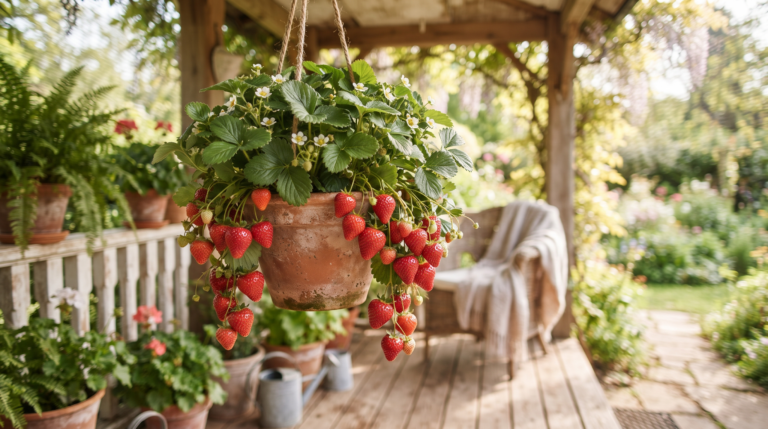
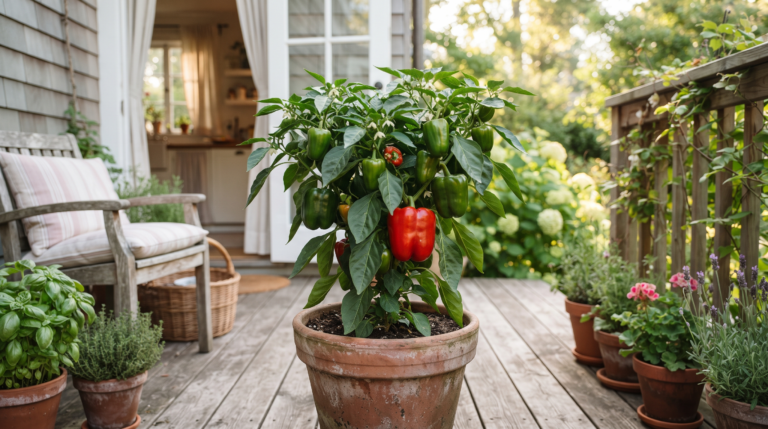
Loving the container life? Try pairing your tomatoes with peppers in containers or a pot of strawberries for a full small-space harvest.
Tips
- Pick a compact 'patio' or 'bush' variety if space is tight—they're bred for containers.
- Use a light-colored pot in hot climates; dark pots can overheat roots in full sun.
- Rotate the pot every few days so all sides get even sunlight.
- Pinch off suckers on indeterminate types to focus energy on fruit.
- Group pots together to slow evaporation on the hottest days.
Common Problems
Blossom end rot (dark, sunken spots on the bottom of fruit)
Usually caused by uneven watering and calcium uptake. Water consistently and mulch the soil surface to keep moisture steady.
Lots of leaves but few tomatoes
Often too much nitrogen or too little sun. Switch to a bloom-boosting fertilizer and make sure the plant gets at least 6 hours of direct light.
Yellowing lower leaves
Can signal overwatering or nutrient depletion. Check drainage and begin a regular feeding schedule; see our guide on yellow leaves on plants for more.
White powdery coating on leaves
This is powdery mildew, common in humid, crowded conditions. Improve airflow, water at the base, and remove affected leaves promptly.
Varieties to Try
- 'Tiny Tim' – tidy dwarf perfect for small pots
- 'Patio Princess' – compact and heavy-yielding
- 'Bush Early Girl' – reliable determinate for early fruit
- 'Sungold' – super-sweet golden cherry (vining)
- 'Roma' – meaty paste tomato for sauces
- 'Tumbling Tom' – trailing type great for hanging baskets